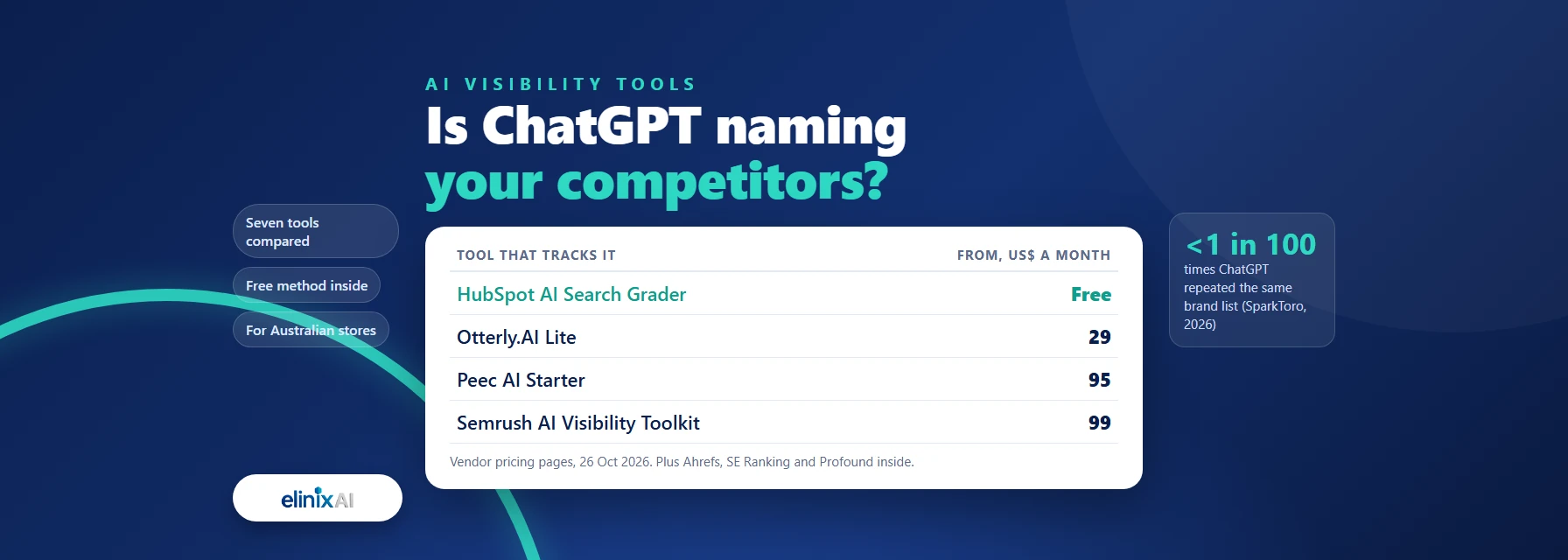
The platforms that show whether ChatGPT recommends your competitors are AI visibility tools, such as Otterly.AI, Peec AI, Semrush, Ahrefs Brand Radar, SE Ranking and Profound. Each one runs your buyers' questions through ChatGPT on a schedule and counts how often every brand gets named. Paid plans start at US$29 a month (Otterly.AI pricing, October 2026), and HubSpot's AI Search Grader gives a free one-off check.
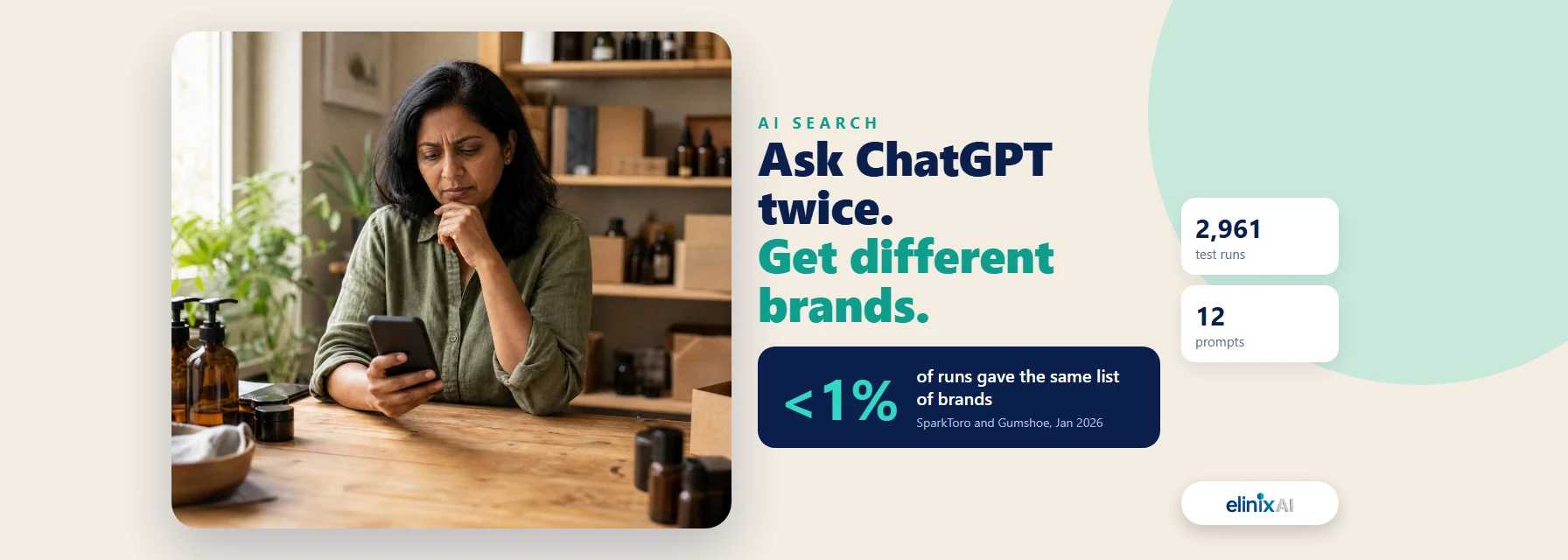
You need a tool, or a careful manual routine, because one chat proves very little. In a study of 2,961 runs, ChatGPT gave the same list of brands in two answers less than 1 time in 100 (SparkToro, January 2026). This guide compares seven options on price, engines and what they show about competitors. It also covers a free method, what a small Australian store actually needs, and what to do with the data.
Prices below are in US dollars, billed monthly, before tax, as listed on each vendor's pricing page on 26 October 2026. They change often, so check before you buy. Elinix AI uses SE Ranking for keyword research. None of these companies paid to be listed.
Key facts
- ChatGPT repeated the same brand list less than 1 time in 100, across 2,961 runs of 12 prompts (SparkToro, January 2026)
- Otterly.AI Lite costs US$29 a month for 15 tracked prompts across four AI engines (Otterly.AI, October 2026)
- Peec AI Starter costs US$95 a month for 50 prompts, run daily on three AI models you choose (Peec AI, October 2026)
- Semrush's AI Visibility Toolkit costs US$99 a month and covers ChatGPT and Google AI Mode in Australia (Semrush, 2026)
- Ahrefs Brand Radar's index holds more than 496 million monthly prompts, about 28 million of them for ChatGPT (Ahrefs, October 2026)
- HubSpot's AI Search Grader is free and accepts any brand name, so you can check a competitor too (HubSpot, 2026)
Prefer to hand it over? Our ecommerce SEO and AI search service tracks your buyers' questions in ChatGPT and works on the pages and sources those answers draw from.
What does an AI visibility tool actually measure?
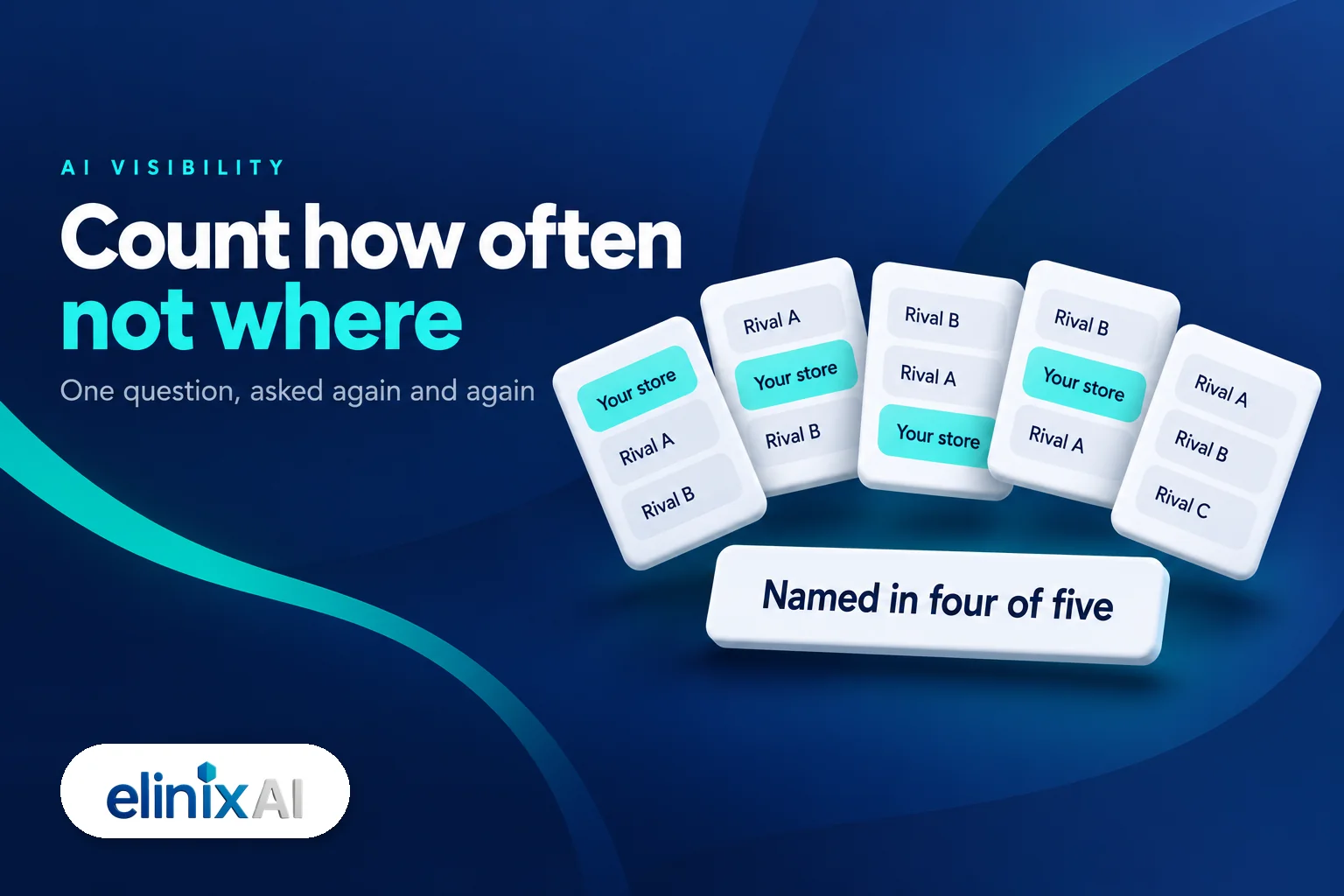
An AI visibility tool measures how often ChatGPT and other AI engines name your brand, and your competitors, when they answer the questions your buyers ask. You give it a list of prompts. It runs them on a schedule and reports the mention rate, share of voice against competitors, the sources the AI cited, and the tone it used about each brand.
The core numbers are the same across most tools:
| Metric | What it tells you |
|---|---|
| Mention rate (visibility) | The share of answers that name your brand |
| Share of voice | Your mentions compared with each competitor's |
| Citations or sources | The pages and sites the AI drew on, including the ones that name competitors |
| Sentiment | Whether the AI describes your brand well or badly |
| Position | Where in the answer your brand appears |
Treat position as the weakest of these. SparkToro found that some brands appeared in almost every answer even when their place in the list kept moving. In one ChatGPT test, a Los Angeles hospital appeared in 69 of 71 answers, a 97% visibility rate, but came first in only 25 of them. The study's authors called visibility across many prompts, run many times, "a reasonable metric" (SparkToro, January 2026).
The sources column is where competitor tracking pays off. When ChatGPT names a competitor and cites a gift guide, a Reddit thread or a review site, that page is the one you need to be on. Our AI search statistics for Australian ecommerce show how fast AI-referred traffic is growing.
Which tools show whether ChatGPT recommends your competitors?
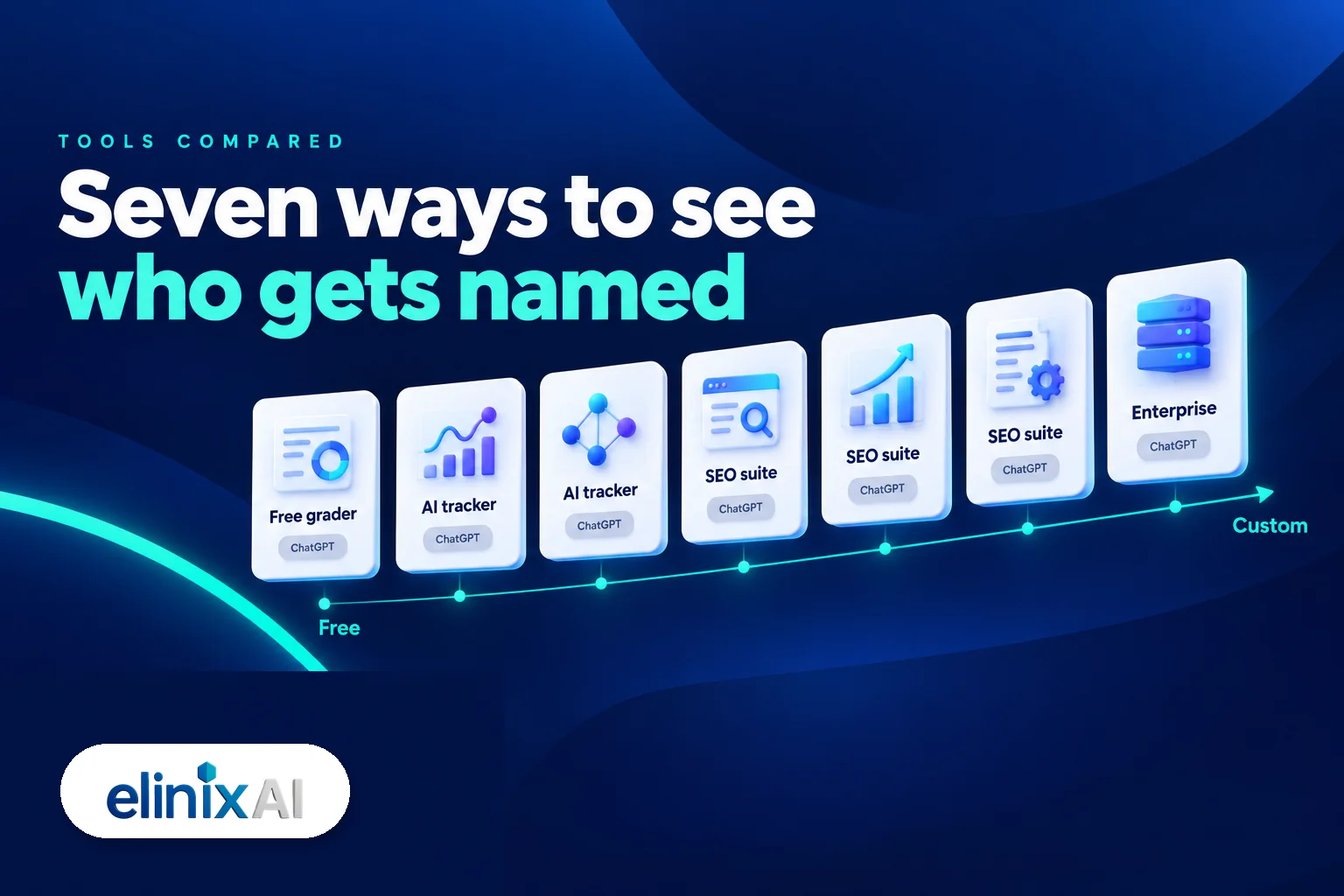
Seven tools cover ChatGPT competitor tracking at prices a small store can test: HubSpot's free grader, Otterly.AI, Peec AI, Semrush, Ahrefs Brand Radar, SE Ranking and Profound. They differ most on three things: which AI engines the base plan covers, how many prompts you get, and whether you can see competitors without setting each one up.
| Tool | Entry price (US$/month) | AI engines in the entry plan | Prompts | Best for |
|---|---|---|---|---|
| HubSpot AI Search Grader | Free, one-off | ChatGPT, Perplexity, Gemini | Not prompt-based | A first look at you and one rival |
| Otterly.AI Lite | 29 | ChatGPT, AI Overviews, Perplexity, Copilot | 15 | The lowest-cost ongoing tracking |
| Peec AI Starter | 95 | Choose 3, from ChatGPT, AI Mode, AI Overviews, Copilot, Gemini and more | 50, daily | Prompt tracking with product-level data |
| Semrush AI Visibility Toolkit | 99 | ChatGPT, Google AI Mode | Not stated | Stores already on Semrush |
| Ahrefs Brand Radar | Included in Lite at 129 | AI Overviews, AI Mode, Gemini, Copilot, Perplexity, ChatGPT | 150 checks | Seeing competitors with no setup |
| SE Ranking AI Search add-on | 89, on top of Core at 129 | AI Overviews, AI Mode, ChatGPT | 200 and up | Google rankings and AI in one place |
| Profound | Custom; free 7-day trial | ChatGPT, Gemini, AI Overviews on the trial | 50 on the trial | Larger brands with a budget |
What does each tool do well, and where does it fall short?
Each tool has a clear strength. Otterly.AI and Peec AI are built only for AI tracking. Semrush, Ahrefs and SE Ranking add AI tracking to an SEO suite, which suits a store that already pays for one. HubSpot is a free snapshot, and Profound is built for enterprise budgets.
HubSpot AI Search Grader
HubSpot's grader is a free, one-time check of what ChatGPT, Perplexity and Gemini say about a brand. It scores sentiment, presence, brand recognition, share of voice and market position, and it accepts any brand name, so you can run your top competitor straight after yourself (HubSpot). The catch is in HubSpot's own description: the check is "based on their training data". It does not show what ChatGPT finds when it searches the web for a shopping question, which is where a small brand has the best chance of appearing.
Otterly.AI
Otterly.AI is the cheapest ongoing tracker in this list. Lite costs US$29 a month for 15 prompts across ChatGPT, Google AI Overviews, Perplexity and Microsoft Copilot, and Standard costs US$189 for 100 prompts (Otterly.AI). Google AI Mode, Gemini and Claude cost extra. Fifteen prompts is enough to watch your core product questions against two or three rivals, but not a full category.
Peec AI
Peec AI Starter costs US$95 a month for 50 prompts, run daily on three AI models you choose, with unlimited users (Peec AI). Its daily view shows visibility, position, sentiment and share of voice against competitors. It also lists AI Shopping tracking, with a product catalogue fetched from Shopify and per-product visibility. That is the closest match in this list to how a Shopify store sells. Starter covers one country, so set it to Australia. Perplexity is an add-on below Enterprise.
Semrush AI Visibility Toolkit
Semrush's AI Visibility Toolkit costs US$99 a month. It shows how AI platforms position your competitors against your brand, and analyses share of voice and sentiment (Semrush Knowledge Base). Australia is a listed region, which matters, because answers change by location. Semrush's knowledge base names ChatGPT and Google AI Mode for prompt tracking. Its bundled SEO and AI Search plans, from US$199 a month, list 50 daily prompts across Google, ChatGPT, Perplexity and Gemini (Semrush pricing).
Ahrefs Brand Radar
Ahrefs Brand Radar is the strongest option for looking at competitors without setting anything up. Its AI Visibility Index models more than 496 million monthly prompts from real searches, about 28 million of them for ChatGPT, so you can look up any brand, including a rival you have not tracked yet (Ahrefs Brand Radar). Custom prompt tracking is included free on every paid Ahrefs plan from Lite, which costs US$129 a month with 150 checks on AI prompts (Ahrefs pricing). The full AI Visibility Index starts at US$199 a month. Ahrefs itself says the index is best once your brand already appears in AI search, so a new store may find little about itself there.
SE Ranking
SE Ranking sells AI tracking as an AI Search add-on at US$89 a month, on top of a base plan such as Core at US$129 (SE Ranking pricing). The add-on tracks Google AI Overviews, AI Mode and ChatGPT, with unlimited competitor research across all three. It suits a store that wants Google rankings and AI answers in one report. The 14-day free trial includes 20 AI prompts a day. Disclosure: Elinix AI uses SE Ranking for keyword data.
Profound
Profound is built for large brands. Its Enterprise plan is custom-priced and tracks up to nine answer engines, including ChatGPT, Perplexity, Google AI Mode, Gemini, Copilot and Claude (Profound pricing). The free trial runs 50 prompts daily for 7 days on ChatGPT, Gemini and Google AI Overviews. For most small stores, the trial is a useful benchmark and the full plan is more than the job needs.
Can you track ChatGPT competitor recommendations for free?
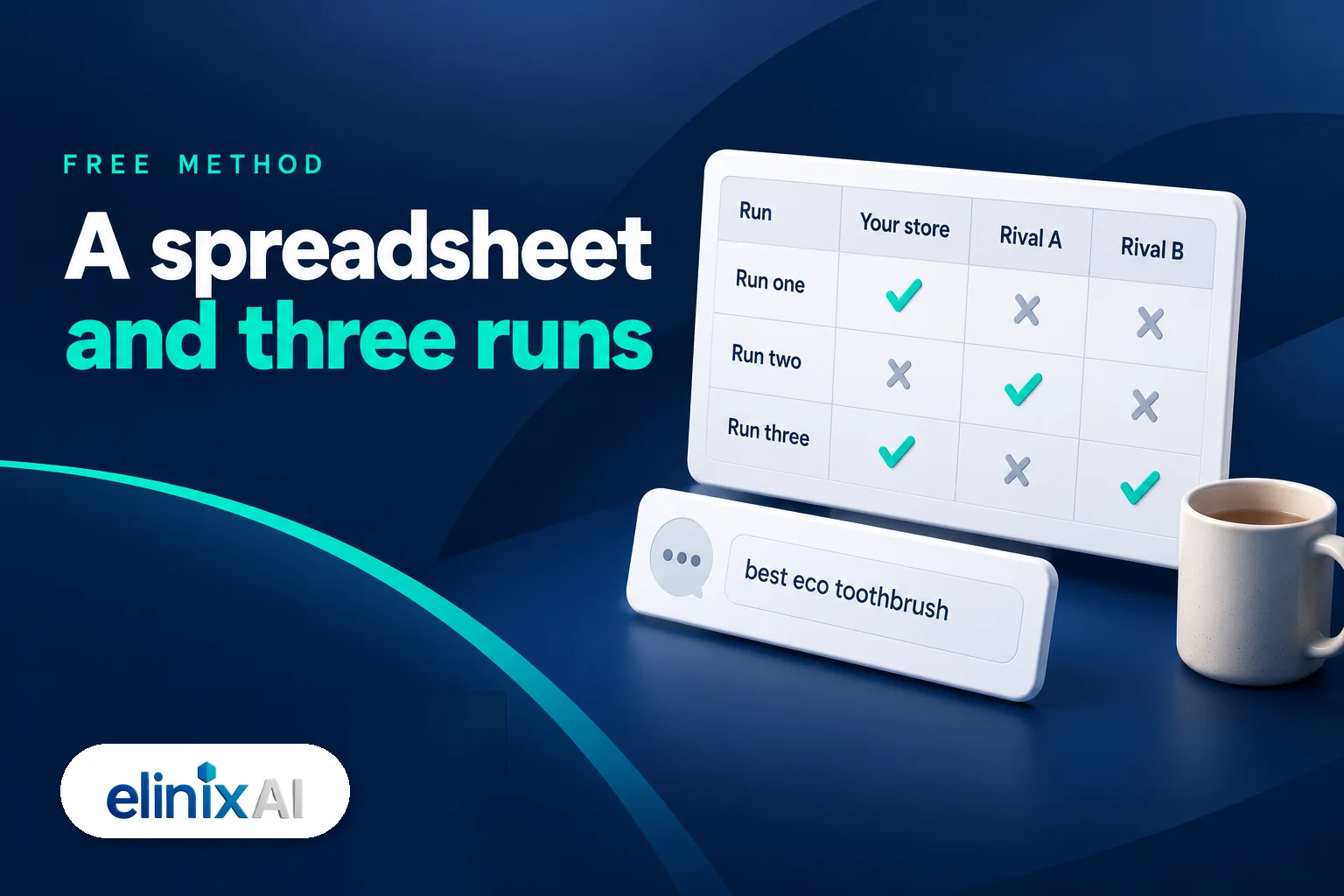
Yes. You can track ChatGPT competitor recommendations for free by running a fixed set of buyer questions yourself, several times each, and logging every brand named in a spreadsheet. Ten prompts run three times each is 30 runs a month. It will not match a tool's scale, but it shows the pattern and the sources.
- Write 10 buyer questions. Use the words customers use, such as "best plastic-free toothbrush in Australia" or "where to buy merino socks online". Mix category, comparison and problem questions.
- Use a clean session. Open a temporary chat, or a browser where you are logged out, so your history does not steer the answer.
- Run each question three times. SparkToro's data shows one run is close to meaningless.
- Log every brand named. One row per run, one column per brand, a 1 or a 0.
- Copy the cited sources. Note any page that names a competitor and not you.
- Work out the mention rate. Mentions divided by runs, for you and for each competitor.
- Repeat monthly with the same questions. Change the list only when your range changes.
Our 5-minute test for whether ChatGPT recommends your brand gives the prompt types to start with. Once you have more than about 20 prompts, or want Perplexity and Google's AI answers as well, a paid tool saves more time than it costs.
How do you choose the right tool for a small Australian store?
Choose on five things, in this order: the engines your customers use, Australian location settings, enough prompts to run each question repeatedly, source and citation data, and price. Most small stores are best served by one dedicated tracker with 15 to 50 prompts, not an enterprise platform.
| Question | Why it matters |
|---|---|
| Does the entry plan cover the engines you need? | Add-on engines raise the price fast. On Otterly.AI Lite, adding AI Mode, Gemini and Claude takes US$29 to US$76 a month |
| Can you set the location to Australia? | ChatGPT may use a general location from the user's IP address in its searches (OpenAI Help Center), so US results can name different brands |
| Do you get enough prompts? | 15 prompts covers core products against two or three rivals. A full category needs 50 or more |
| Does it show the sources behind each answer? | Sources tell you where to earn mentions. A score alone does not |
| Does the price fit your margin? | Start on a monthly plan for two or three months before you commit to a year |
If you already pay for Semrush, Ahrefs or SE Ranking, try its AI tracking before buying a second tool. If you pay for none of them, Otterly.AI or Peec AI is the simpler start.
What should you do once you can see your competitors winning?
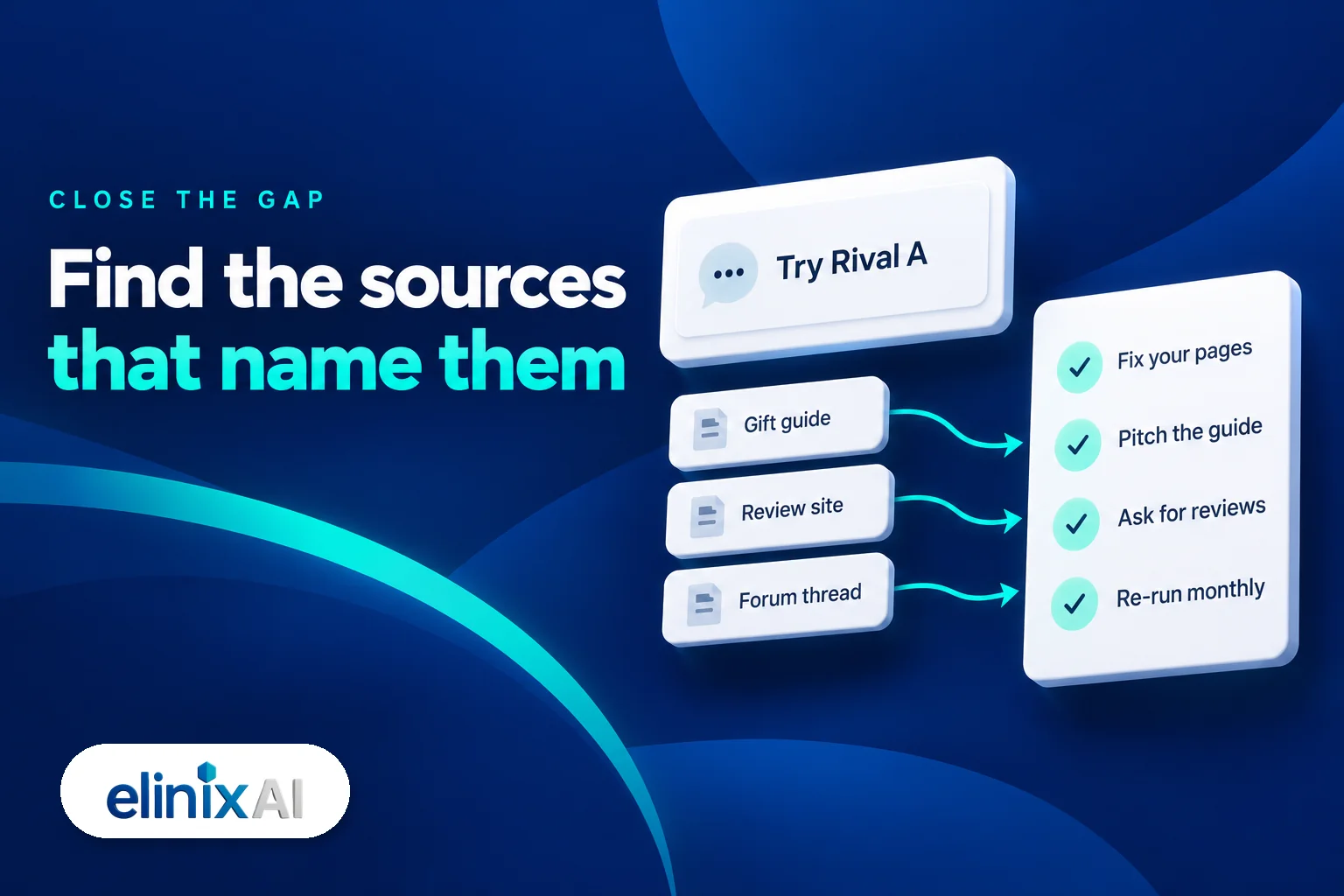
Use the data to fix the gap, not to watch it. Look at the sources ChatGPT cites when it names a competitor, then work on getting your brand onto those pages and making your own pages easier to quote. Track the same prompts monthly to see if the mention rate moves.
- List the sources that name competitors and not you. Common ones are gift guides, review sites, comparison articles and forum threads.
- Fix your own pages first. Open collection and product pages with a plain answer, with facts in the page text. Our 12 checks for Shopify AI search optimisation cover what to change.
- Earn mentions on the cited sites. Pitch the gift guide editor, ask happy customers for independent reviews, and answer real questions in the forums AI engines read.
- Re-run the same prompts monthly. Compare mention rate and share of voice against last month, never one answer.
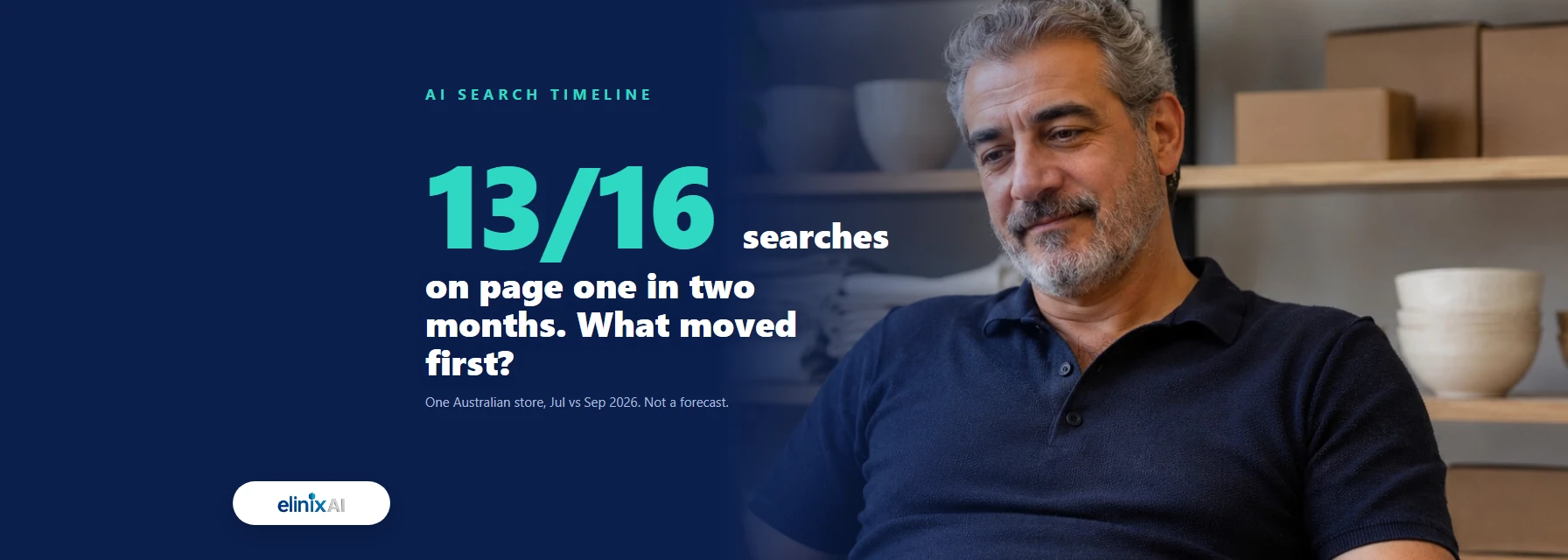
Here is what happened for one client. An Australian eco toothbrush brand rewrote its collection pages answer-first, added FAQ answers with schema, and published an article citing two peer-reviewed studies. In two months, 13 of its 16 tracked searches reached page one of Google, and visits from AI tools rose 271%, with ChatGPT alone up 280%. The eco toothbrush case study covers what did not go to plan as well. It is one store over two months, and it is no forecast for yours.
Free audit: we run your buyer questions through ChatGPT, show which competitors get named and which sources they come from. Book a free AEO, GEO and SEO audit.
If you would rather hand the fixing over, our ecommerce SEO and AI search service does this work for Shopify stores. Our complete guide to ecommerce SEO, AEO and GEO explains how it fits with ordinary Google SEO.
Frequently Asked Questions
What is the cheapest way to track whether ChatGPT recommends my competitors?
The cheapest way is free: run 10 buyer questions in ChatGPT three times each every month and log the brands named in a spreadsheet. HubSpot's AI Search Grader is also free for a one-off check. The cheapest paid tracker in this comparison is Otterly.AI Lite at US$29 a month for 15 prompts.
Can I see which brands ChatGPT recommends in my category without tracking prompts?
Yes. Ahrefs Brand Radar's AI Visibility Index lets you look up any brand across more than 496 million modelled prompts without setting up your own list. It works best for brands that already appear in AI answers, so a small or new competitor may show little data.
Do AI visibility tools track ChatGPT and Google AI Overviews together?
Most do. Otterly.AI, Ahrefs Brand Radar and SE Ranking all cover ChatGPT and Google AI Overviews in their standard offers, and Peec AI lets you choose both among its three models. Semrush's AI Visibility Toolkit names ChatGPT and Google AI Mode for prompt tracking.
Why does my AI visibility score change every week?
Scores change because ChatGPT writes every answer fresh and its brand lists rarely repeat. SparkToro found the same list appeared in two answers less than 1 time in 100. A tool that runs many prompts many times smooths this out, so judge the trend across months, not a single week.
Are AI visibility tools accurate for Australian results?
Only if they run your prompts from an Australian location. ChatGPT can add a user's approximate location to its searches, so results set to the United States can name different brands. Semrush lists Australia as a supported region, and Peec AI Starter lets you pick one country.
Should I pay for a tool or an agency to track AI visibility?
Pay for a tool if you have time to read the reports and act on them yourself. A tool shows where competitors win, but someone still has to fix your pages and earn mentions on the sources AI engines cite. Our guide on how to choose an AI SEO agency in Australia covers the questions to ask if you hand it over.