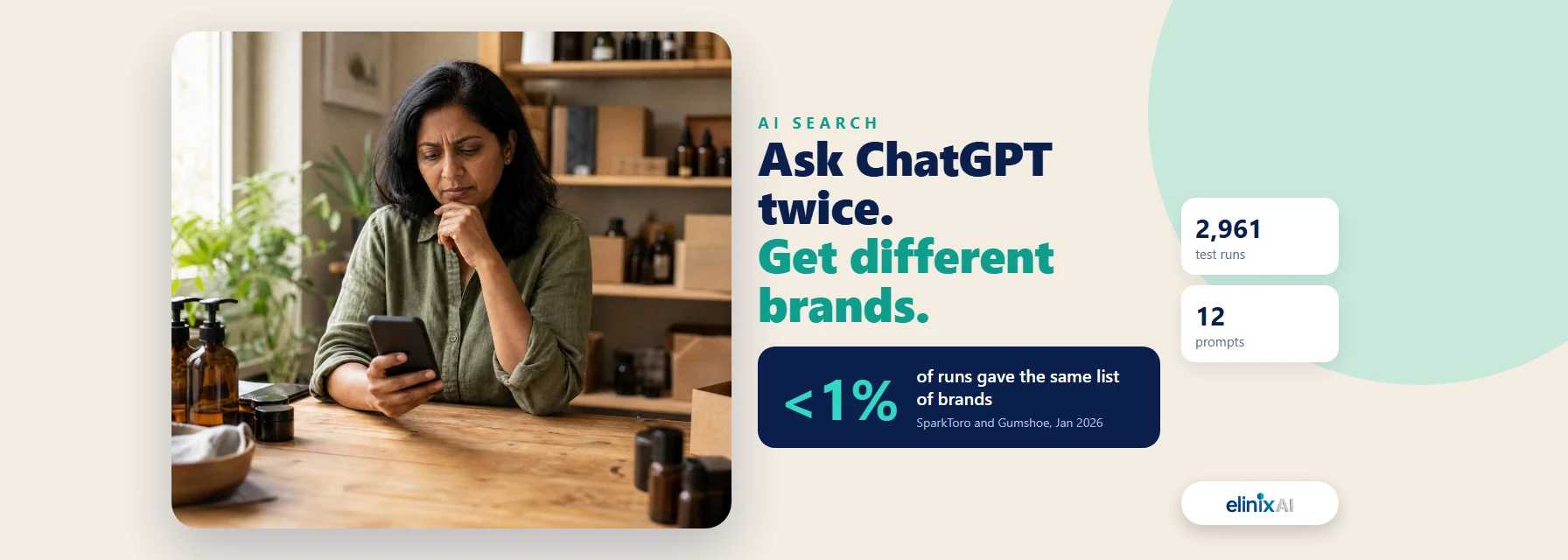
ChatGPT decides which brands to recommend by naming the ones its sources agree on. It answers from what it learned in training or from web pages it searches, so brands that other sites describe clearly and mention often have the best odds. The list still moves: ChatGPT repeated the same brand list less than 1 time in 100 (SparkToro, January 2026).
That matters because of the size of the audience. ChatGPT has more than 900 million weekly users (OpenAI, February 2026). This guide explains the two ways ChatGPT finds brands, what it looks for in a source, how its shopping results pick products, why the answer changes every time, and the steps that give an Australian online store a better chance of being named.
Key facts
- ChatGPT has more than 900 million weekly active users (OpenAI, February 2026)
- ChatGPT gave the same list of brands in two responses less than 1 time in 100, across 2,961 runs of 12 prompts (SparkToro and Gumshoe, January 2026)
- Adding citations, quotations and statistics lifted a page's visibility in AI answers by 30 to 40% in testing (Princeton GEO study, KDD 2024)
- YouTube mentions had the strongest link to AI visibility across 75,000 brands, at about 0.737, while the number of pages on a site barely mattered, at about 0.194 (Ahrefs, December 2025)
- ChatGPT's product results are chosen by ChatGPT and are not ads (OpenAI Help Center, 2026)
- Sites that opt out of OpenAI's search crawler, OAI-SearchBot, are not shown in ChatGPT search answers (OpenAI developer docs, 2026)
How does ChatGPT decide which brands to recommend?
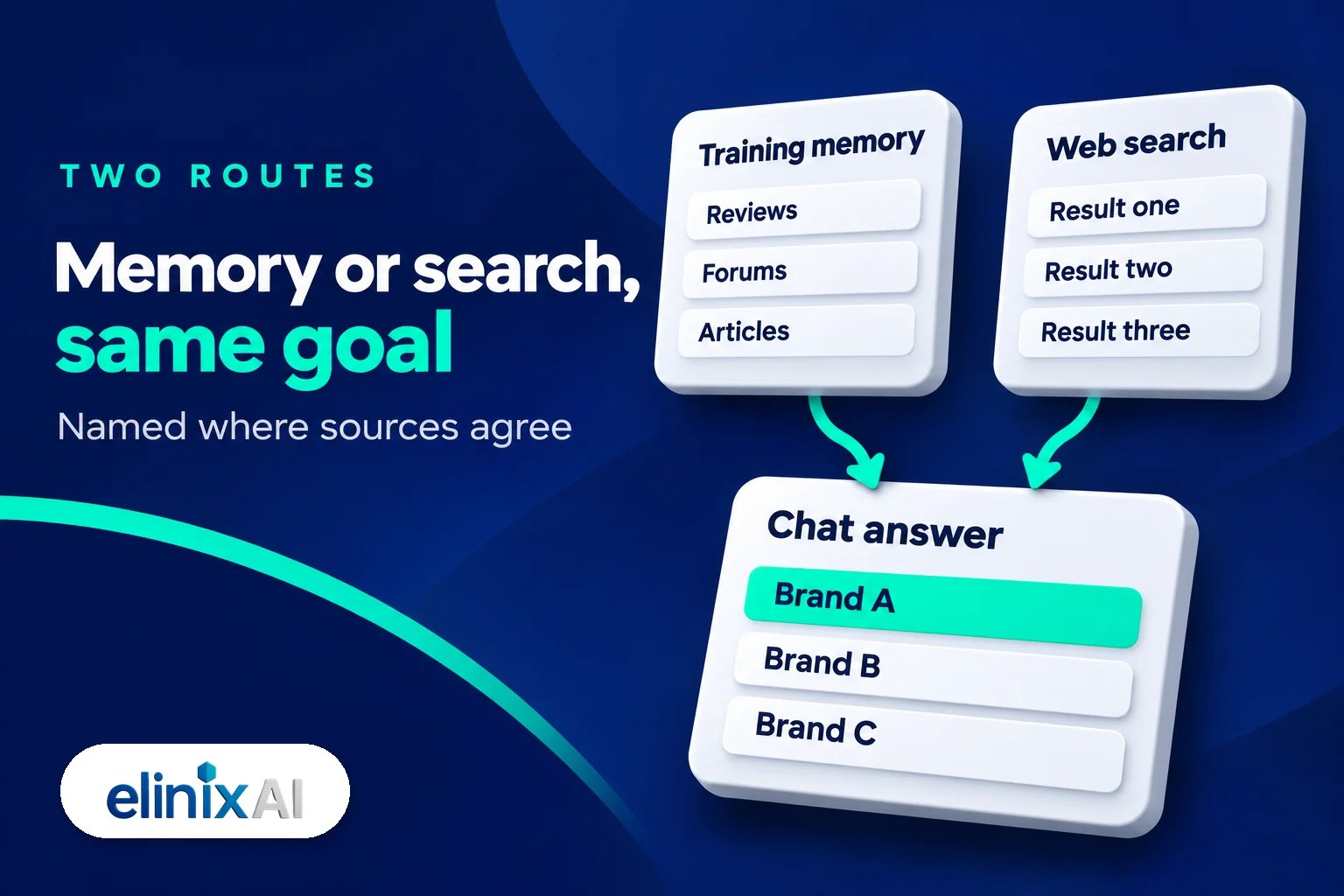
ChatGPT decides which brands to recommend in one of two ways. It answers from what its model learned in training, or it searches the web and builds the answer from the pages it reads. In both cases it names the brands that its sources mention most often and most clearly for that need. It does not run a ranking formula you can buy into.
OpenAI says its models learn from three kinds of information: content that is publicly available on the internet, data from partners, and information from users and trainers (OpenAI Help Center). The model learns how words and names tend to appear together. A brand that appears often next to "plastic-free toothbrush" in reviews, forums and articles becomes a likely answer to a question about plastic-free toothbrushes.
| Answer from training | Answer from web search | |
|---|---|---|
| Where it comes from | Patterns learned from public web pages, partner data and user feedback | Live search results, read and summarised |
| How fresh it is | Only as recent as the last training run | Current, often with links |
| What gets you named | Being mentioned widely and consistently over time | Pages that rank in the search results ChatGPT reads, and say clearly what you sell |
| Shows sources | No | Yes, as citations |
Shopping questions bring up live product results and cited pages, so the second route is where a small brand has the best chance. Our AI search statistics for Australian ecommerce show how fast that traffic is growing.
When does ChatGPT search the web instead of answering from memory?
ChatGPT searches the web when a question would benefit from current information, and a user can also switch search on by hand. OpenAI's help pages name local questions and shopping questions among them. When it searches, ChatGPT rewrites the question into one or more shorter search queries and sends them to search providers.
OpenAI's help page shows the rewrite in action. A question about new cancer drugs became a short query with the year added, followed by more specific follow-up queries after the first results came back (OpenAI Help Center). The same page links to Microsoft's and Shopify's privacy policies for the providers it searches with.
Location changes the query too. ChatGPT estimates a user's general location from their IP address and can add it to the search, the way "good restaurants near me" becomes a query naming the city. If memory is on, saved details such as "I'm vegan" can be added as well. So a shopper in Melbourne and a shopper in Brisbane can get different brands for the same question.
For a brand, that has one practical meaning. If your pages do not rank for the short query ChatGPT sends, they are not in the pile it summarises.
Why does ChatGPT recommend a different brand every time?
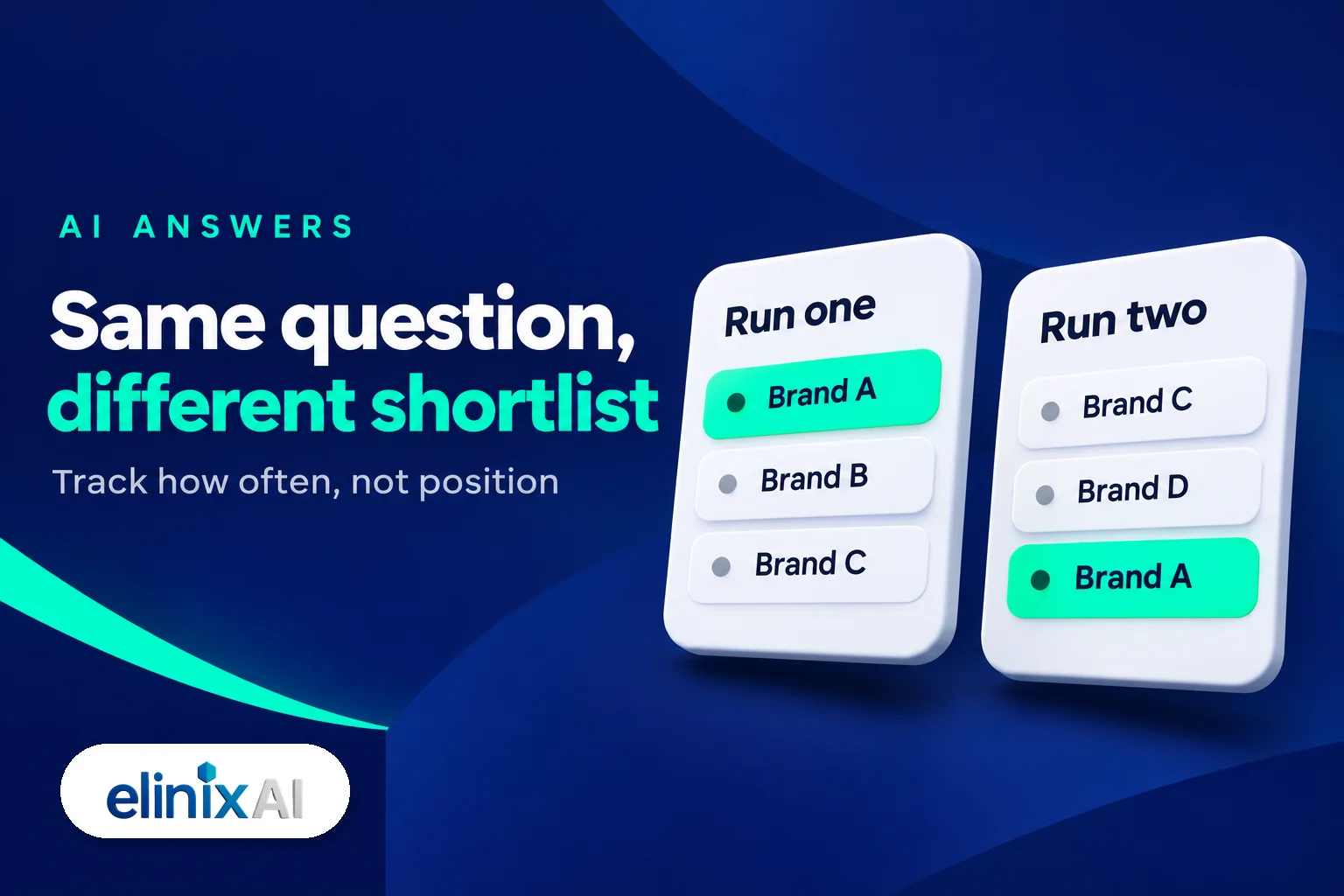
ChatGPT recommends different brands each time because it writes every answer fresh, choosing likely words with some randomness built in. OpenAI says plainly that the same question may get different answers. Search results, location and memory add more variation. So the useful question is how often your brand appears, never what position it holds.
SparkToro and Gumshoe tested this. Around 600 volunteers ran 12 prompts through ChatGPT, Claude and Google's AI a combined 2,961 times in November and December 2025. ChatGPT returned the same list of brands in two responses less than 1 time in 100, and the same list in the same order closer to 1 time in 1,000 (SparkToro, January 2026).
The same study found a pattern under the noise. Some brands appeared in most answers even though their position moved around. In one ChatGPT test, a hospital appeared in 69 of 71 answers, a 97% visibility rate, while ranking first in only 25 of them. The study also found more consistent answers in categories with few options, and scattered ones in categories with many.
Two things follow for a store owner:
- Test more than once. One chat tells you very little. Our 5-minute test for whether ChatGPT recommends your brand uses several prompts and repeat runs for this reason.
- Ignore anyone selling a "ChatGPT ranking". The study's authors called rank tracking in AI tools baloney. Share of answers is the number worth watching.
What makes a source worth citing in a ChatGPT answer?
ChatGPT cites sources that answer the question directly, carry specific facts, and are backed up elsewhere on the web. Research points to two layers. On the page, citations, quotes and statistics raise the odds of being used. Off the page, how often other sites and videos mention your brand matters more than how big your own site is.
The on-page evidence comes from the Princeton GEO study, presented at KDD 2024. Researchers rewrote web pages in nine ways and measured how much of each page appeared in AI answers. Adding citations to sources, adding quotations and adding statistics performed best, with a relative lift of 30 to 40% (Aggarwal et al., GEO: Generative Engine Optimization). Keyword stuffing gave little to no improvement.
The off-page evidence comes from Ahrefs, which studied 75,000 brands across ChatGPT, Google AI Mode and AI Overviews in December 2025. Mentions on YouTube had the strongest link to AI visibility, at a correlation of about 0.737, and branded mentions across the web were also strong. The number of pages on a site barely registered, at about 0.194 (Ahrefs, December 2025). Ahrefs is clear that "correlation isn't causation", so read this as a pattern.
Put together, ChatGPT favours a brand that other people talk about and a page that states facts it can lift. Our complete guide to ecommerce SEO, AEO and GEO covers how the two layers fit with ordinary Google SEO.
How does ChatGPT choose products when someone is shopping?
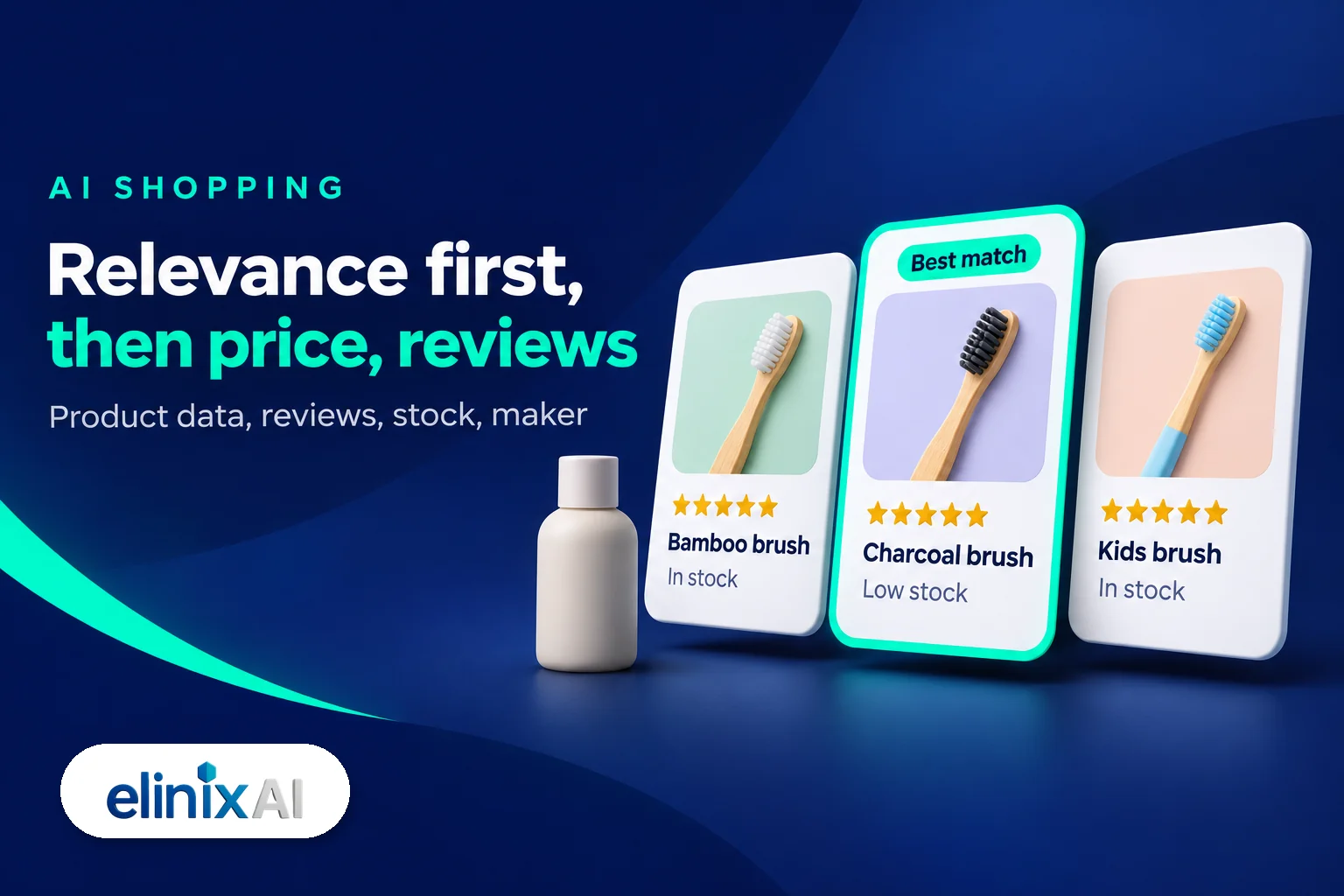
When a question shows shopping intent, ChatGPT shows products it judges relevant to the request and the shopper's context. OpenAI says it weighs structured product data such as price and description, other third-party content, its own first answer before new search results, and its safety policies. Reviews and price matter when the shopper's question makes them matter.
OpenAI's shopping help page is the most direct statement of the criteria. In its example of a shopper looking for dog costumes, ChatGPT "may consider available options, price, reviews, and ease of use". If the shopper sets a $30 budget, price takes over. The page also says "Product results are selected independently by ChatGPT and are not ads" (OpenAI Help Center, Shopping with ChatGPT Search).
When a product is sold by several stores, ChatGPT lists merchants and ranks them on:
| Factor | What it means for your store |
|---|---|
| Availability | In-stock products with current data |
| Price | ChatGPT highlights the lowest price it knows of |
| Quality | OpenAI does not define it; accurate product information and genuine reviews are the safest bet |
| Maker or primary seller | Selling your own products direct counts in your favour |
Review summaries in ChatGPT are written from reviews on public websites, and OpenAI does not verify them. That makes reviews on your store and on independent sites part of what ChatGPT says about your products. A post-purchase review request is the simplest way to keep them coming; our guide to the essential Klaviyo flows for Shopify stores covers where it fits.
Product data reaches ChatGPT in two ways. OpenAI says Shopify product data is already integrated through Shopify Catalog, with no extra work for individual merchants. Other stores can apply to send a direct product feed. Whether a particular Australian store is eligible depends on Shopify's own rules, so check the agentic storefronts settings in your Shopify admin.
What will not get your brand recommended?
Four things do not get a brand recommended by ChatGPT: paying for product placement, stuffing pages with keywords, publishing large numbers of thin pages, and blocking OpenAI's search crawler. The first is not on offer, the second and third show no benefit in the research, and the fourth removes your site from ChatGPT search answers altogether.
- Paying for placement. OpenAI says product results are selected by ChatGPT, are not ads, and are not influenced by its partnerships. Ads are kept separate from product results.
- Keyword stuffing. The Princeton study found it gave little to no improvement, and on Perplexity it did about 10% worse than leaving the page alone.
- Thin pages at volume. In the Ahrefs data, the number of pages on a site had almost no link to AI visibility.
- Blocking OAI-SearchBot. OpenAI's developer docs say OAI-SearchBot is the crawler that surfaces websites in ChatGPT search, and sites that opt out are not shown in those answers, apart from plain navigational links (OpenAI developer docs, Overview of OpenAI crawlers). Blocking GPTBot, the training crawler, is a separate choice and does not affect search.
Check your robots.txt and your content delivery network settings. Some security settings block unfamiliar bots by default, and OpenAI recommends allowing requests from its published IP ranges.
How do you become a brand ChatGPT recommends?
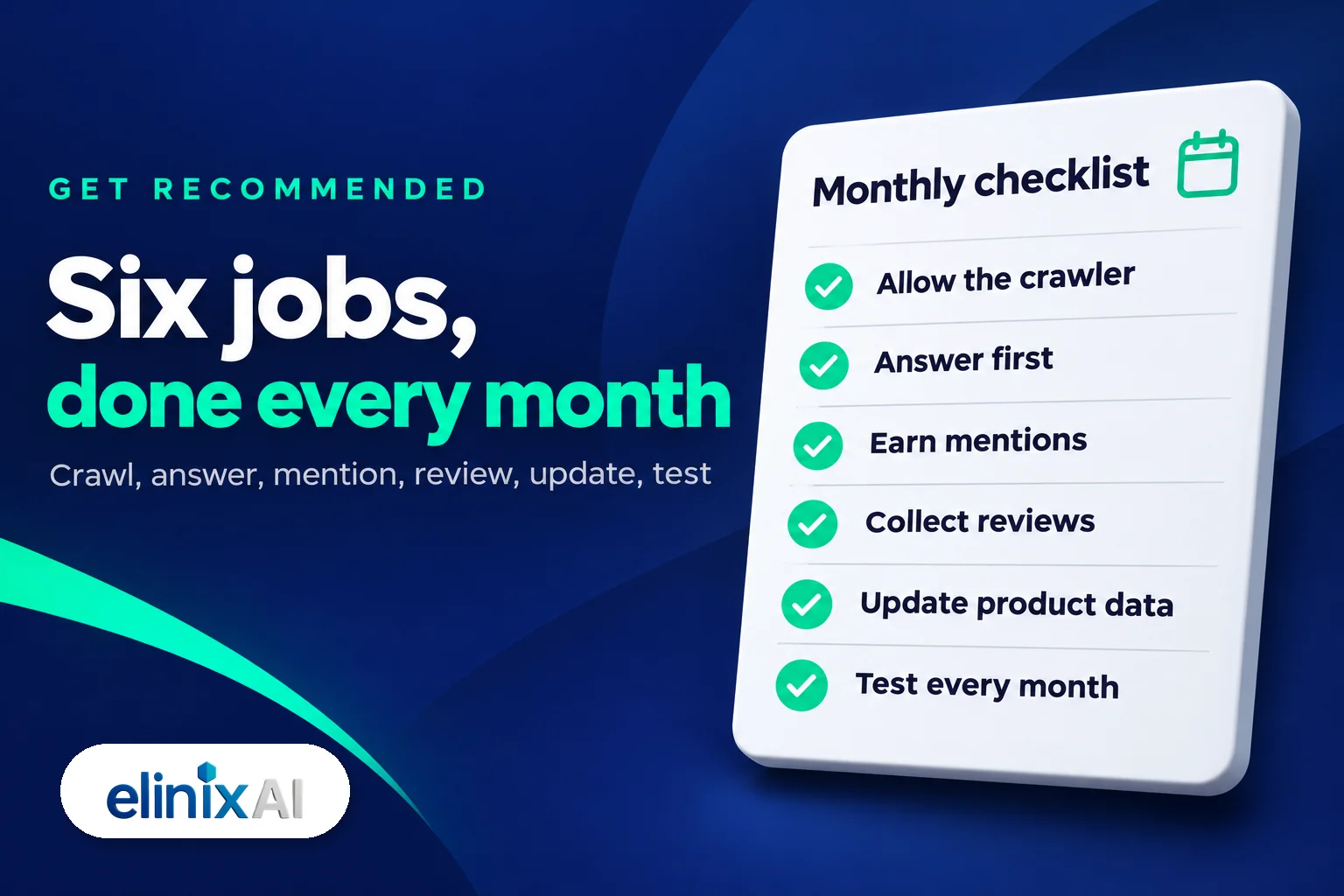
To become a brand ChatGPT recommends, make your site easy to read and quote, then get other sites talking about you. In practice that is six jobs: let OpenAI's crawler in, answer buyer questions first on your key pages, earn mentions on sites ChatGPT reads, collect reviews, keep product data current, and test monthly.
- Let OAI-SearchBot in. Check robots.txt and your firewall or content delivery network settings.
- Answer first on collection and product pages. Open each key page with a plain answer to the question a buyer asks, with sizes, materials, prices and delivery times in the page text. Put an FAQ in the page HTML.
- Add facts worth citing. Specific numbers, named sources and short expert quotes are what the Princeton study found AI engines use.
- Earn mentions off your site. Reviews on independent sites, YouTube videos, gift guides, comparison articles and real Reddit threads are where the Ahrefs data points.
- Keep product data accurate. Price, stock and descriptions should match everywhere ChatGPT can read them, including your Shopify catalogue.
- Test every month, with several prompts. Track how often you appear, never your position.
Our 12 checks for Shopify AI search optimisation turn these into a checklist you can run on your own store.
Here is what happened for one client. An Australian eco toothbrush brand rewrote its collection pages answer-first, added 23 FAQ answers with schema, and published an article citing two peer-reviewed studies. Between July and September 2026, 13 of its 16 tracked searches reached page one of Google, and visits from AI tools rose 271%, with ChatGPT alone up 280%. The full eco toothbrush case study includes what did not go to plan. It is one store over two months, and it is no forecast for yours.
Free audit: we check what ChatGPT says about your store today and which pages it reads. Book a free AEO, GEO and SEO audit.
If you would rather hand the work over, our ecommerce SEO and AI search service covers these steps for Shopify stores.
Frequently Asked Questions
Can I pay ChatGPT to recommend my brand?
No. OpenAI says product results in ChatGPT are selected independently, are not ads, and are not influenced by its partnerships. Ads are kept separate from product results. The way into the answers is to be the brand that relevant sources describe clearly and mention often.
Does ChatGPT use Google or Bing to find brands?
ChatGPT runs its own search and sometimes partners with other search providers, sending them rewritten queries. OpenAI's help page links to Microsoft's and Shopify's privacy policies for those providers. Ranking well in ordinary search results still matters, because ChatGPT reads the pages those searches return.
How long does it take for ChatGPT to start recommending a brand?
There is no fixed timeline, because ChatGPT's answers change with every run and every update. Pages can be picked up by ChatGPT search once OAI-SearchBot has crawled them. Off-site mentions take longer to build. For one Australian eco toothbrush brand, AI tool visits rose 271% over two months of page work.
Why does ChatGPT recommend my competitor and not me?
Usually because your competitor is mentioned more often on sites ChatGPT reads, or its pages answer the buyer's question more directly. Check which sources ChatGPT cites when it names them. Those citations show the pages and publications you need to be on.
Do reviews affect ChatGPT recommendations?
Yes, in shopping answers. OpenAI says ChatGPT may weigh reviews when choosing products and writes review summaries from reviews on public websites. It does not verify those reviews, so reviews on your own store and on independent sites both shape what ChatGPT says about you.
Should I block GPTBot to protect my content?
Blocking GPTBot stops OpenAI using your pages to train its models, and it does not remove you from ChatGPT search. OAI-SearchBot is the crawler that decides whether you appear in search answers. Keep OAI-SearchBot allowed if you want to be found.