AI search optimisation usually takes 3 to 6 months to show meaningful movement for an online store, and longer in a competitive category. The first signs come sooner, because Google says crawling a changed page "can take anywhere from a few days to a few weeks". Rankings, AI citations and orders then build on that, month by month.
Nobody can promise you a date, and we will not either. What we can show you is how the work usually runs, what Google, AI Overviews and ChatGPT each need before they pick up a change, what happened for one Australian store in two months, and the signs to watch before sales move.
Key facts
- Crawling a changed page can take a few days to a few weeks (Google Search Central, 2025)
- Some search changes take effect in hours, while others take several months (Google Search Central, 2025)
- A page must be indexed and eligible for a snippet before it can be a supporting link in AI Overviews (Google Search Central, 2025)
- ChatGPT search can take about 24 hours to adjust after a robots.txt change (OpenAI, 2026)
- 38% of AI Overview citations came from top 10 pages, down from 76% a year earlier (Ahrefs, 863,000 searches, March 2026)
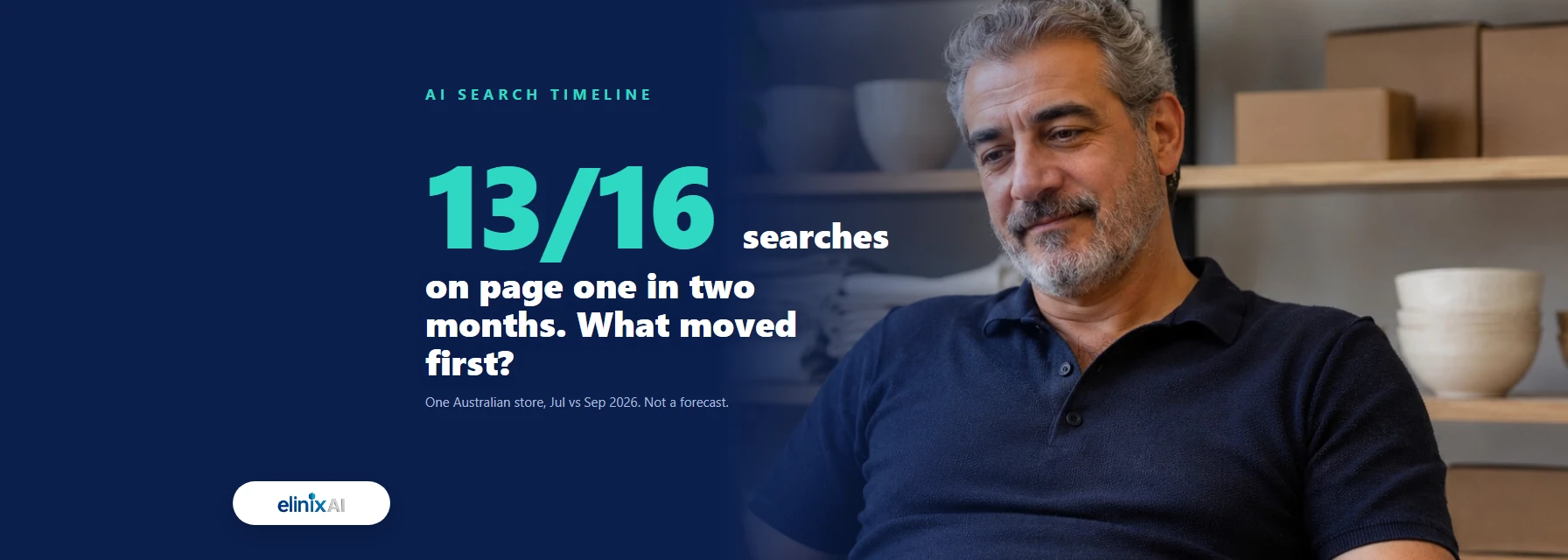
- An Australian eco toothbrush brand reached page one for 13 of its 16 tracked searches in two months (store's SE Ranking and GA4 data, September 2026)
How long does AI search optimisation take for an online store?
For most online stores, expect 3 to 6 months before AI search and SEO work shows meaningful movement in rankings, AI answers and orders. Technical fixes can show up within weeks. Citations, authority and topical coverage build over quarters, and a competitive category takes longer than a niche one.
AI search optimisation means making your store easy for ChatGPT, Perplexity, Gemini and Google's AI Overviews to find, read and recommend. You may also hear it called GEO (generative engine optimisation) or AEO (answer engine optimisation). We run it as one service with SEO, because the two share the same clock.
Google sets that clock. Its SEO Starter Guide says some changes take effect in a few hours and others take several months, and suggests waiting a few weeks before judging whether a change worked (Google Search Central, December 2025). Google's AI Overviews draw on the same index, so they cannot move faster than Google has crawled your pages.
Three things sit outside anyone's control, which is why no honest agency gives you a date:
- How often Google decides to recrawl your pages.
- How many strong competitors already answer the same buyer questions.
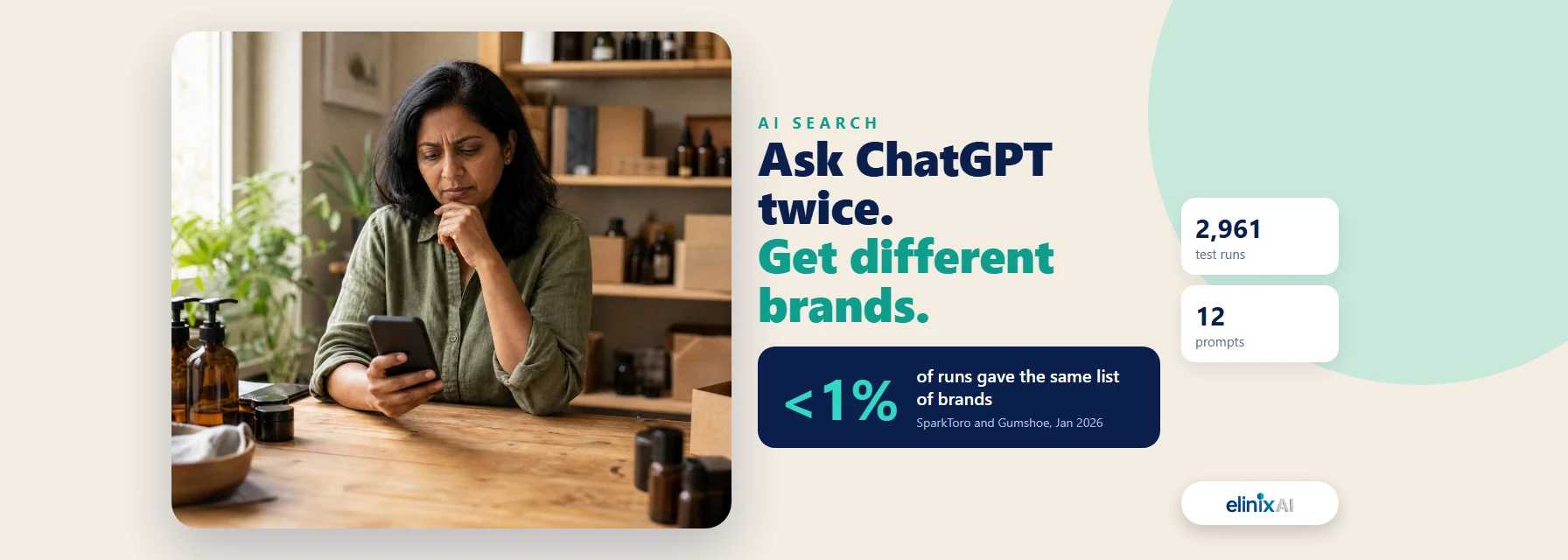
- How AI answers change from one run and one model update to the next.
Our own service page puts it plainly. Anyone promising you results in 30 days is either lucky or lying.
What happens in each month of the work?
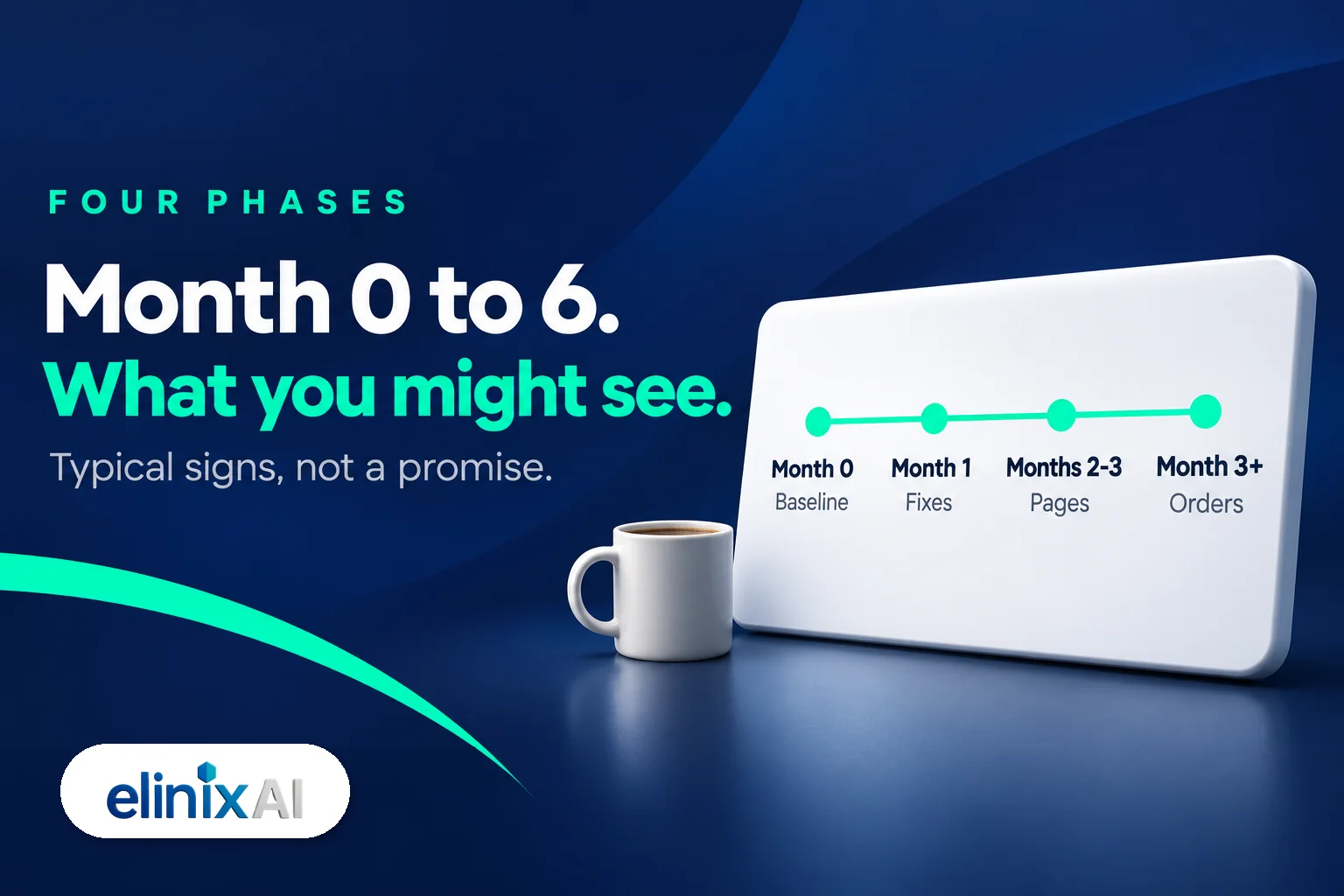
The work runs in four phases. Month 0 records a baseline, month 1 fixes the technical foundations, months 2 and 3 rewrite the pages closest to revenue and add content worth citing, and from month 3 the work compounds. Each phase has its own early signs, so you can judge progress before orders move.
| Month | The work | What you might see first | What to measure |
|---|---|---|---|
| Month 0 | Audit and baseline across the buyer questions that matter | Nothing yet. This is the starting line | Rankings, AI answers, GA4 and Search Console |
| Month 1 | Crawlability, rendering, schema, entity details, internal links, page speed | Pages recrawled, errors cleared | Indexed pages and crawl errors |
| Months 2 to 3 | Collection and product pages rewritten answer-first, citable content published | Near-miss searches move up, impressions rise | Positions on tracked searches, AI Assistant visits |
| Month 3 onward | More buyer questions covered, more authority, monthly reporting | Orders from Google and AI tools start to show | Organic orders, revenue, mentions in AI answers |
These phases are how our AI search and SEO service runs. The "what you might see first" column is what usually shows up at each stage, not a promise. Some stores see a phase's signs early. Others need a month or two longer.
The baseline in month 0 matters more than it looks. Without a record of where you started, nobody can tell you in month 4 whether the work moved anything. Our 12-point AI visibility audit is the checklist we use to set that baseline.
How fast do Google, AI Overviews and ChatGPT pick up a change?
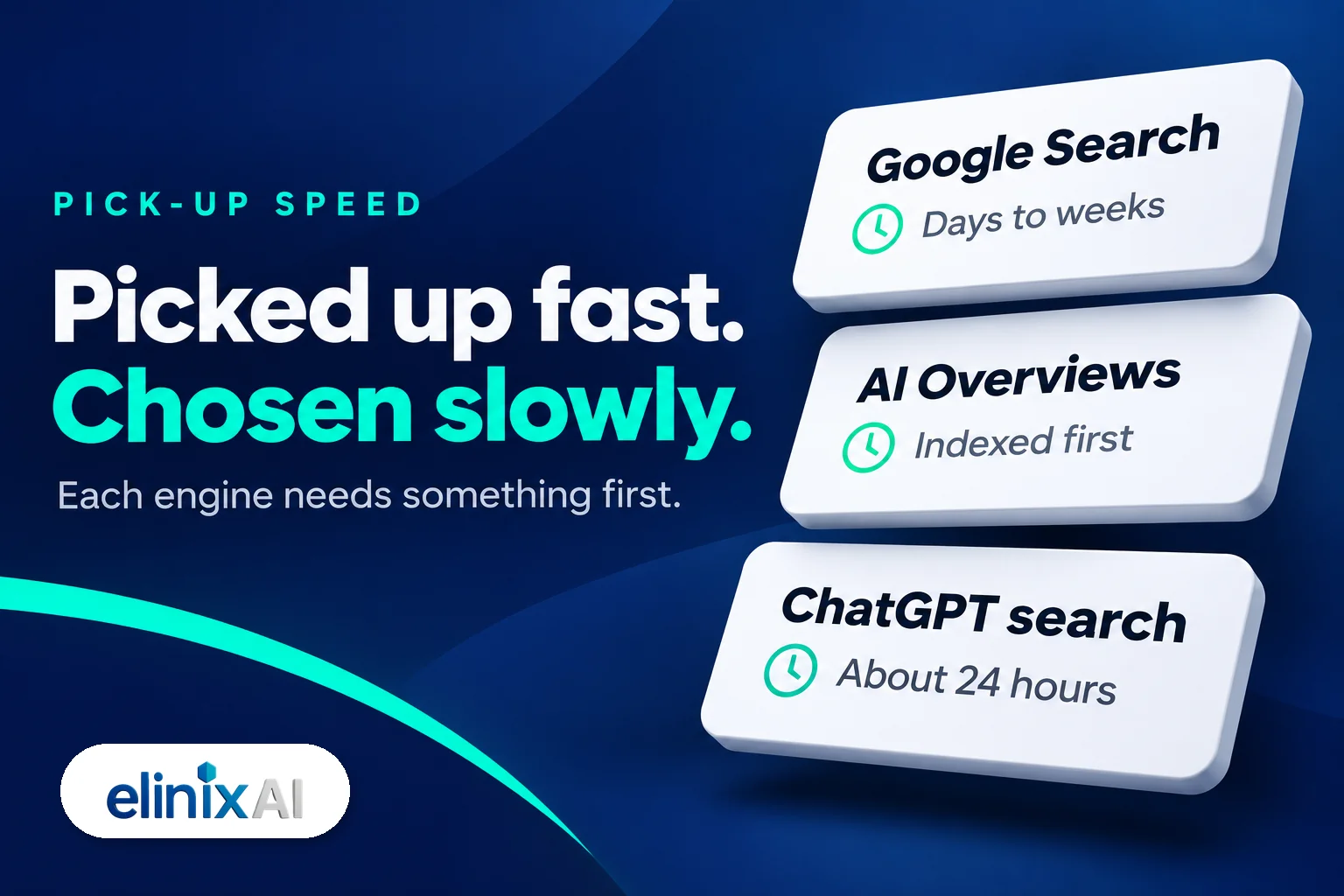
Google usually recrawls a changed page within days to weeks, and AI Overviews draw on that same index. ChatGPT search relies on OpenAI's own crawler, so a store that blocks it does not appear in ChatGPT search answers at all. Getting picked up is fast. Getting chosen takes longer.
| Engine | What it needs first | How fast a change is picked up |
|---|---|---|
| Google Search | The page crawled and indexed | A few days to a few weeks for a recrawl, several months for some changes |
| Google AI Overviews and AI Mode | Indexed and eligible to show with a snippet, with no extra requirements | Follows Google's crawl, which can take several days to several months |
| ChatGPT search | OAI-SearchBot allowed in robots.txt | About 24 hours for OpenAI's systems to adjust after a robots.txt change |
Sources: Google Search Central, AI features and your website (December 2025); OpenAI, Overview of OpenAI Crawlers (2026).
Ranking well still helps, but AI Overviews now cite a wider set of pages. Ahrefs found 38% of AI Overview citations came from top 10 pages, down from 76% a year earlier, across 863,000 searches (Ahrefs, March 2026). So a page sitting on page two can be cited before it reaches page one.
That cuts both ways for your timeline. AI answers can name your store a little earlier than rankings move. They can also drop you just as fast, because the answer is rebuilt every time someone asks. That is why we track AI answers monthly instead of judging them on one check.
What happened for one Australian store in two months?
An Australian eco toothbrush brand moved onto page one of Google for 13 of its 16 tracked searches in two months, four of them at number one. Orders from Google search rose 97%, comparing September 2026 with July in the store's own GA4 data. That is faster than our usual guide, and the reasons matter.
The store had three things going for it. It already ranked on page two and three for valuable searches, so it had near misses to close. Its collection pages carried most of the buying intent. And the changes went onto pages it already had, so Google only had to recrawl them.
| Measure, September vs July 2026 | Result |
|---|---|
| Tracked searches on page one | 13 of 16, four at number one |
| "plastic free toothbrush" | 22nd to 6th |
| "toothpaste tablets australia" | 15th to 2nd |
| Orders from Google search | +97% |
| Google visits that led to a sale | 3.3% to 6.1% |
| Visits to the rewritten collection pages | +231% |
| Visits from AI tools | +271% (ChatGPT alone +280%) |
| Revenue | +20.1% |
Source: the store's GA4 and SE Ranking data, 1 to 28 July vs 1 to 28 September 2026.
Not everything moved on the same clock. Google visits dipped in August while the rewritten pages settled in, then recovered in September. Orders from AI tools had not grown by the end of September, even though visits from AI tools had. Three tracked searches moved down, and total orders fell 7.7% as orders from paid ads fell 31%.
This is one store over two months, so treat it as what happened for this client, not a forecast for yours. The full eco toothbrush case study sets out all seven changes and every miss.
Free audit: find out whether your store has the same near misses on page two. Book a complimentary AEO, GEO and SEO audit and we will go through the report with you.
What makes AI search optimisation faster or slower?
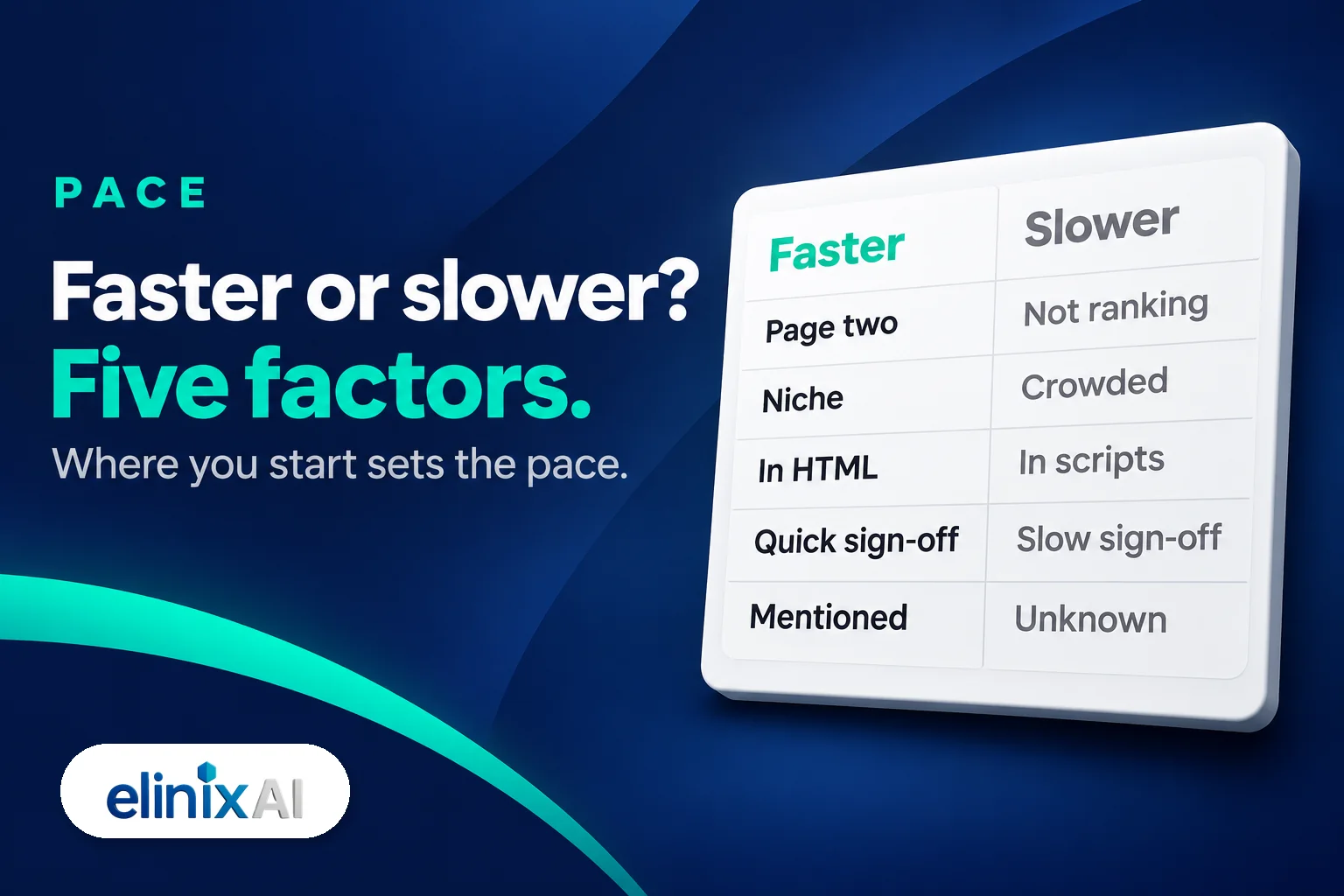
Five things set most of the pace: where you rank today, how crowded your category is, whether crawlers can read your pages, how quickly changes get approved, and whether other sites already mention you. A store with near misses on page two usually moves faster than one that does not rank at all.
| Factor | Usually faster | Usually slower |
|---|---|---|
| Where you rank today | Page two or three for buyer searches | Outside the top 100 |
| Your category | Specific product searches | Crowded searches led by big retailers and marketplaces |
| Page readiness | Answers sit in the page's HTML | Answers load through app scripts, or crawlers are blocked |
| Speed of changes | Changes approved within days | Changes wait weeks for sign-off |
| Other sites | Reviews and mentions already exist | Nobody else mentions the brand |
The page readiness row catches a lot of Shopify stores. If your FAQs or product details only load through an app script, a crawler may never see them. Check it first, because every other step waits on it.
The last row is the slowest to change. Being mentioned on other sites builds over quarters, not weeks, so it is where the 3 to 6 month range comes from for most stores.
How can you tell it is working before sales move?
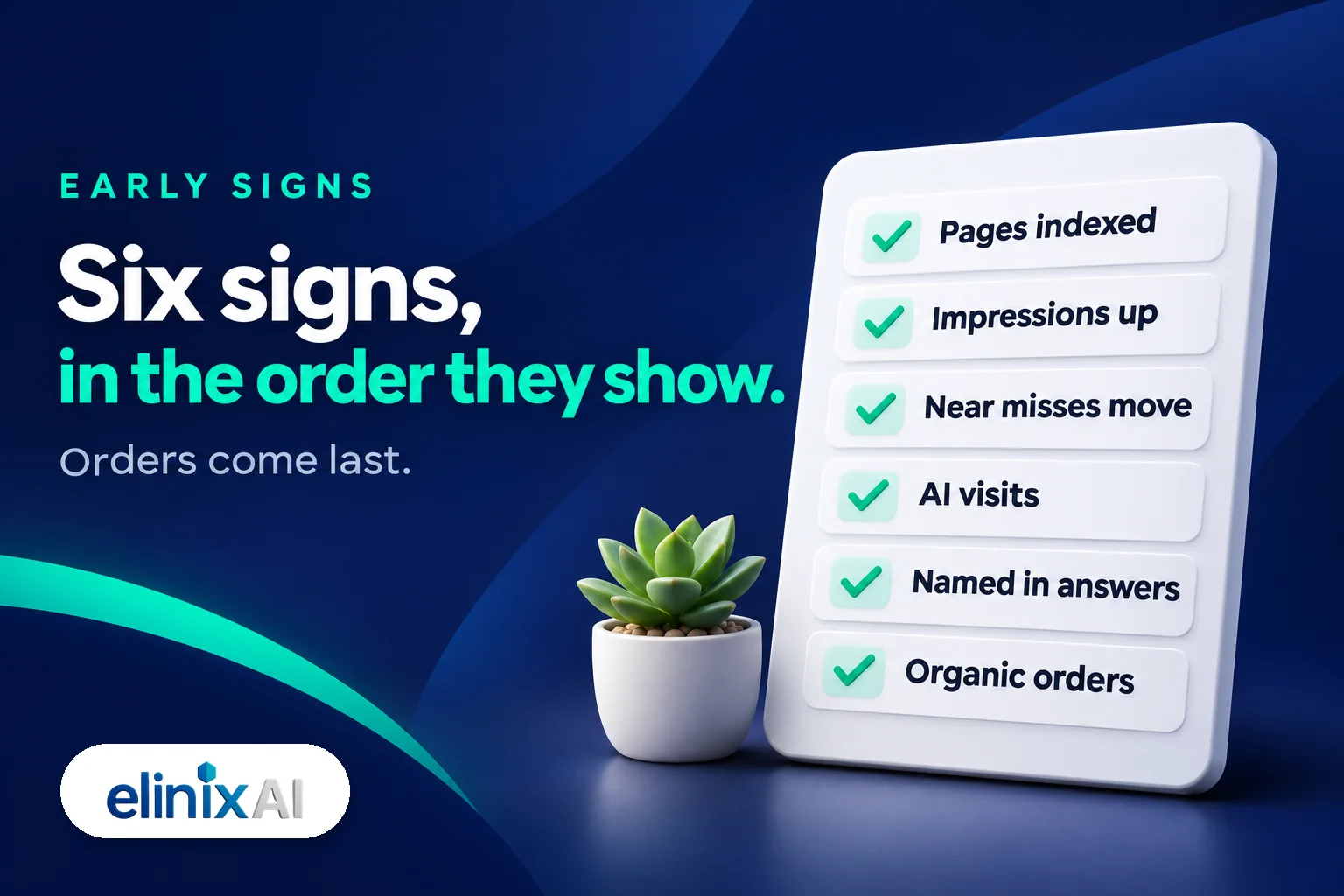
Watch the early signs in the order they usually appear. Pages get indexed first, then impressions rise, then positions on near-miss searches improve, then AI tools start to send visits and name you in answers. Orders come last, so judge months one to three on the earlier signs.
- Indexing. In Google Search Console, check that your changed pages are indexed. This usually shows within weeks.
- Impressions. Search Console counts AI Overviews and AI Mode inside the "Web" search type of its Performance report (Google Search Central, December 2025).
- Positions. Track a fixed set of buyer searches (the eco toothbrush brand tracked 16) and watch the ones sitting just off page one.
- AI Assistant visits. GA4's AI Assistant channel covers visits from ChatGPT, Gemini, DeepSeek, Copilot and Grok, but it excludes Google's AI Overviews and AI Mode (Google Analytics Help, 2026).
- Mentions. Ask the same buyer questions in ChatGPT and Perplexity each month. Our 5-minute ChatGPT test shows how.
- Orders. Organic and AI orders in GA4, compared with the same weeks in month 0.
Mentions count even when nobody clicks. Pew Research Center found that people who saw a Google AI summary clicked a result in 8% of visits, against 15% without one (Pew Research Center, March 2025 data). A shopper who sees your brand named in the answer may come back later through a branded search instead.
When should you decide whether it is worth it?
Agree a review point at month 6, measured against the baseline you recorded in month 0. By then the technical fixes, the page rewrites and a few months of content should have had time to land. A decision at month 2 usually judges the work before Google has finished recrawling it.
Google's own advice on hiring an SEO is to ask what results they expect and in what timeframe (Google Search Central, 2026). The answer tells you a lot. A good one gives a range, the early signs to expect, and what would make it slower.
Three answers should worry you:
- A promised ranking, a promised date, or "results in 30 days".
- Monthly reports with no baseline from before the work started.
- No changes shipped to your pages in the first month.
Budget for six months, not a short trial. Our guide to what an AI SEO programme costs in Australia shows the market bands, so you can plan the full stretch before you start.
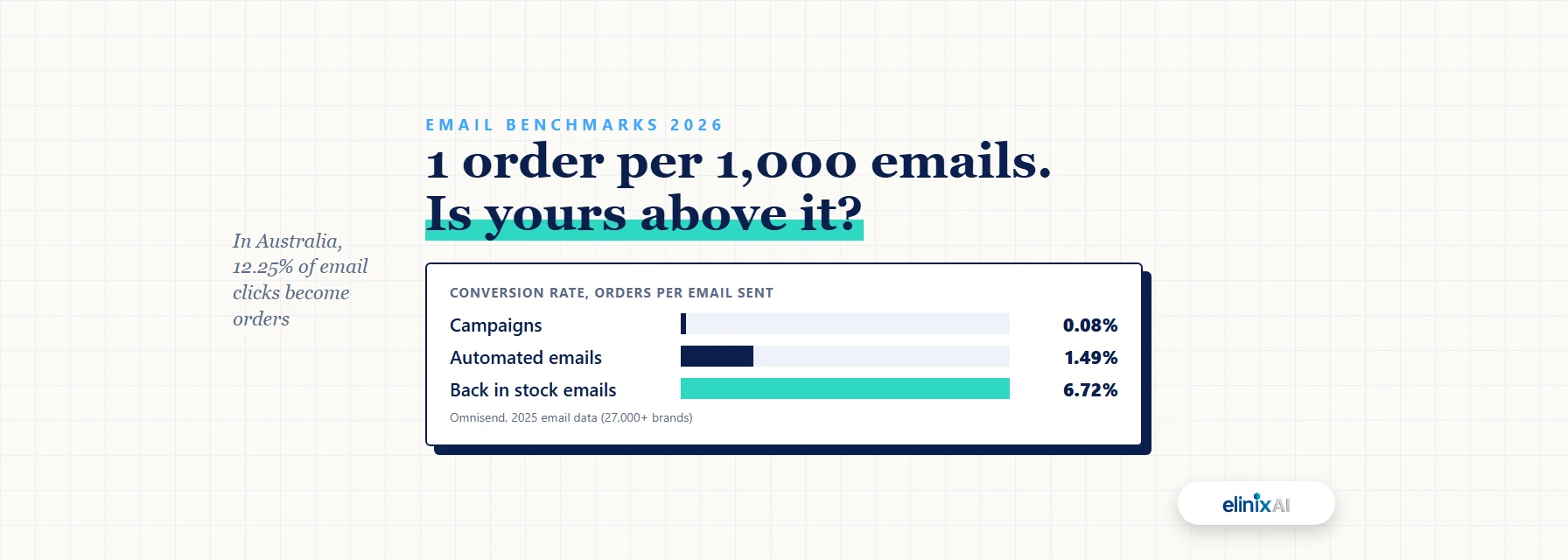
AI search is also the wrong first move if you need revenue this month. It compounds slowly, so we say so on the call rather than take the work. Email moves faster: the Klaviyo flows every Shopify store needs start earning within weeks of setup, and they turn the organic visitors you win later into repeat orders. Our ecommerce SEO, AEO and GEO guide covers the full method once you are ready.
Frequently Asked Questions
Can AI search optimisation work in 30 days?
Some early signs can appear within 30 days, such as pages being recrawled, crawl errors cleared and a few searches moving up. Meaningful movement in rankings, AI answers and orders usually takes 3 to 6 months, and longer in a competitive category. Be wary of anyone who promises results in 30 days.
Is AI search faster than traditional SEO?
AI search runs on mostly the same clock as SEO, because Google's AI Overviews draw on Google's index and ChatGPT search relies on its own crawler reading your pages. AI answers can name a store a little before its rankings reach page one. They can also change faster, so judge them monthly rather than on a single check.
How soon does ChatGPT see a change to my store?
ChatGPT search needs OpenAI's crawler, OAI-SearchBot, to be allowed in your robots.txt file. OpenAI says its systems can take about 24 hours to adjust after a robots.txt change. Being picked up is quick. Being recommended over competitors depends on your pages and on other sites mentioning you, which takes months.
Do I need a blog before AI search optimisation works?
No, most stores start with the pages they already have. The eco toothbrush brand in our case study saw visits from AI tools rise 271% in two months, mostly through rewritten collection and product pages. Articles help later, for the "which is better" and "how to" questions that product pages do not answer.
Why did my traffic dip after the changes?
A short dip is common while Google recrawls and re-ranks rewritten pages. The eco toothbrush brand's Google visits dipped in August 2026 while its new pages settled in, then recovered in September. If a dip lasts more than a few weeks, check Search Console for pages dropped from the index.
What should I see in the first three months?
In months one to three, look for indexed pages, cleared crawl errors, rising impressions in Search Console and better positions on near-miss searches. Visits from AI tools may start to appear in GA4's AI Assistant channel. Orders usually show last, so compare them with your month 0 baseline from month 3 onward.
Do the results keep growing after six months?
They can, but nobody can promise it. Rankings and AI answers shift as competitors publish and as Google and AI models update. Stores that keep covering more buyer questions and keep earning mentions on other sites give the work the best chance to compound, so review it against your baseline every month.