For most Australian businesses, off-the-shelf booking software is enough, and a custom booking system only pays off when your rules, integrations or volume outgrow the tools. Square Appointments is free for one location, while a custom web application typically costs A$25,000 to A$100,000 or more as a market range (What's The Damage, November 2026).
The same test applies to a customer portal. Check what your platform already does, then price the gap. This guide covers when booking software is enough, when a custom build earns its cost, what a portal should include, what it costs in Australia, how it connects to Shopify or your CRM, and what to ask a developer before you sign.
Key facts
- Square Appointments is free for a single location, and Plus costs A$40 a month per location (Square Australia, 2026)
- A custom web application, such as a portal or dashboard, typically costs A$25,000 to A$100,000 or more in Australia as a market range (What's The Damage, November 2026)
- Australian businesses should budget 10% to 25% of the build cost each year for maintenance (What's The Damage, November 2026)
- API and integration work typically costs A$5,000 to A$25,000 as a market range (What's The Damage, November 2026)
- Shopify customer accounts already let customers view orders, reorder and start self-serve returns (Shopify Help Center, 2026)
- The Privacy Act covers businesses with turnover over A$3 million, and health service providers of any size (OAIC, 2026)
When is off-the-shelf booking software enough?
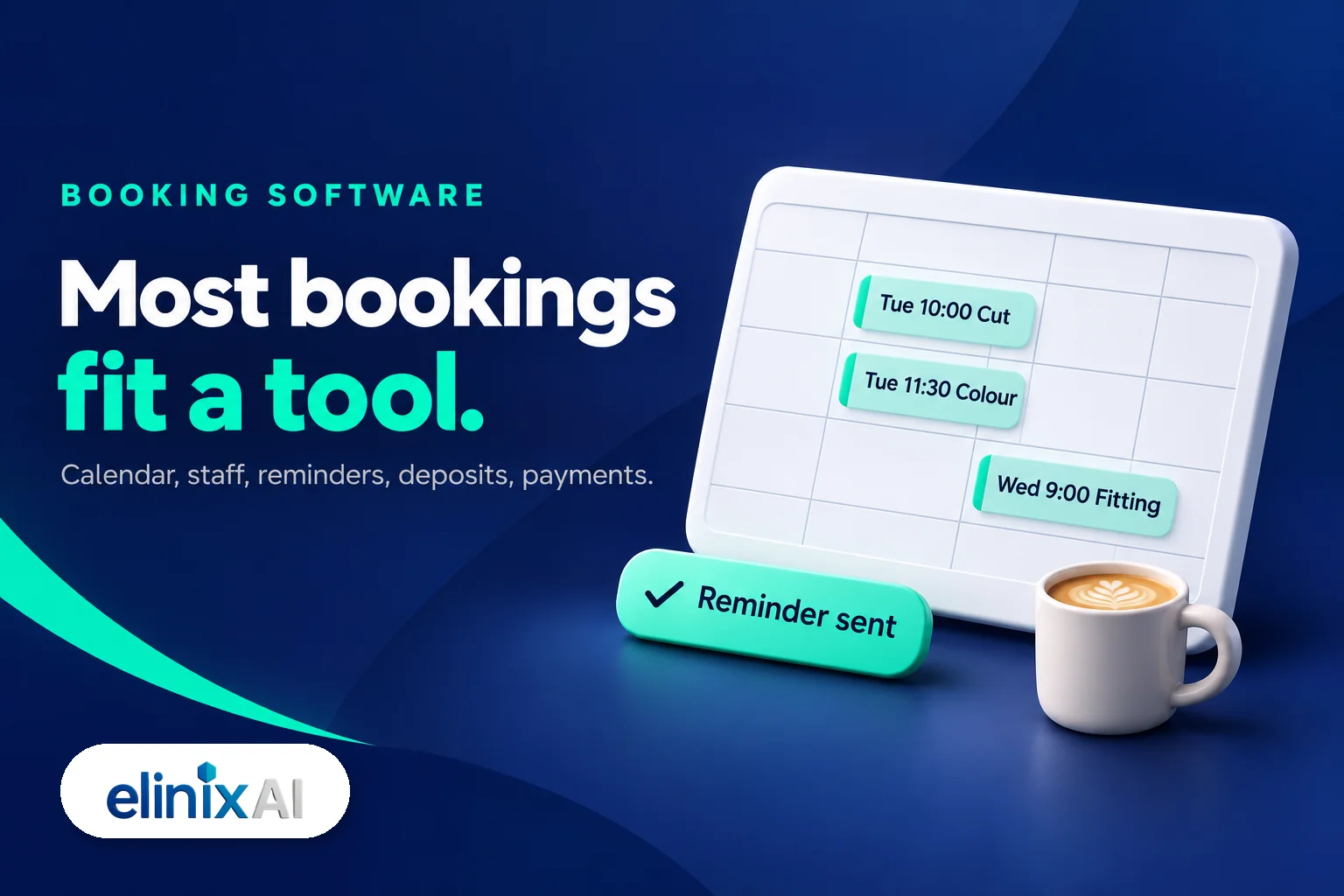
Off-the-shelf booking software is enough when customers book a time with a person, at a location, and pay a deposit or the full price. Square Appointments covers that for free at one location, with an online booking page, reminders and card on file (Square Australia, 2026).
Most service businesses fit that description. A salon, a clinic, a fitting service or a workshop needs a calendar, staff, reminders and payments. Square's Plus plan adds multi-location management, class booking, waitlists and cancellation fees for A$40 a month per location. Premium adds resource management and staff tools for A$90 a month per location. Online card payments cost 2.2% on all three plans.
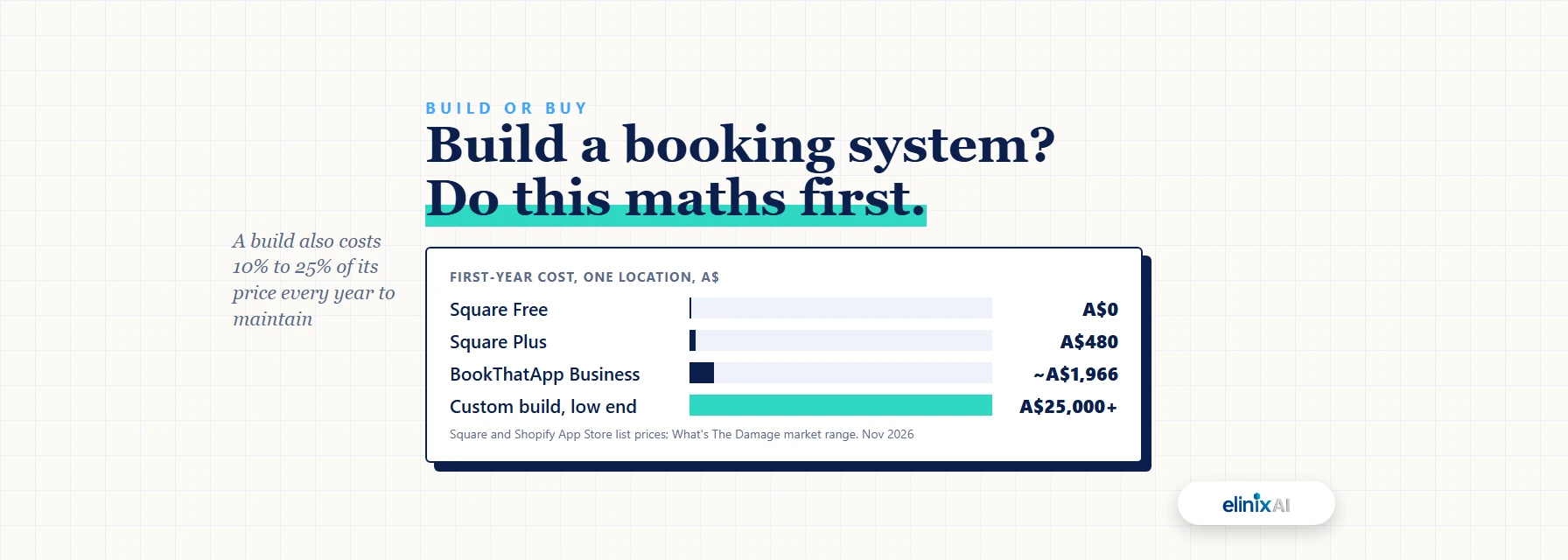
Shopify stores have the same choice inside the Shopify App Store. BookThatApp has a free plan for 10 bookings, and its Business plan covers 1,000 monthly bookings, 20 staff accounts and API access for about A$164 a month (Shopify App Store, 2026). That price is billed in US dollars, so the Australian figure moves with the exchange rate. The app holds a 4.7 star rating from 418 reviews.
Run the maths before you call a developer. Square Plus at one location costs A$480 a year. A custom build at the bottom of the market band, A$25,000, would buy 52 years of that plan. Maintenance on the same build, at 10% to 25% a year, is A$2,500 to A$6,250, which is five to 13 times the yearly software fee on its own.
What's The Damage puts it plainly. The maths that fails is "custom-building a solved problem to avoid a platform's monthly fee" (What's The Damage, November 2026).
| Your situation | Usually the right choice |
|---|---|
| One location, staff calendars, reminders, deposits | Booking software such as Square Appointments |
| Shopify store selling bookable products or services | A booking app from the Shopify App Store |
| Customers need to see orders, reorder or return items | Shopify customer accounts, before any custom build |
| Booking rules no tool supports, checked in a free trial | A custom build, scoped as a small first version |
| Several systems to keep in sync, with staff retyping data | Custom integration work, or a custom portal |
When does a custom booking system pay off?
A custom booking system pays off when the work it removes costs more than the build and its upkeep. That usually means booking rules no tool can model, data that has to flow between several systems, or a customer experience that is central to the sale. Test the tools first, so the build covers only the real gap.
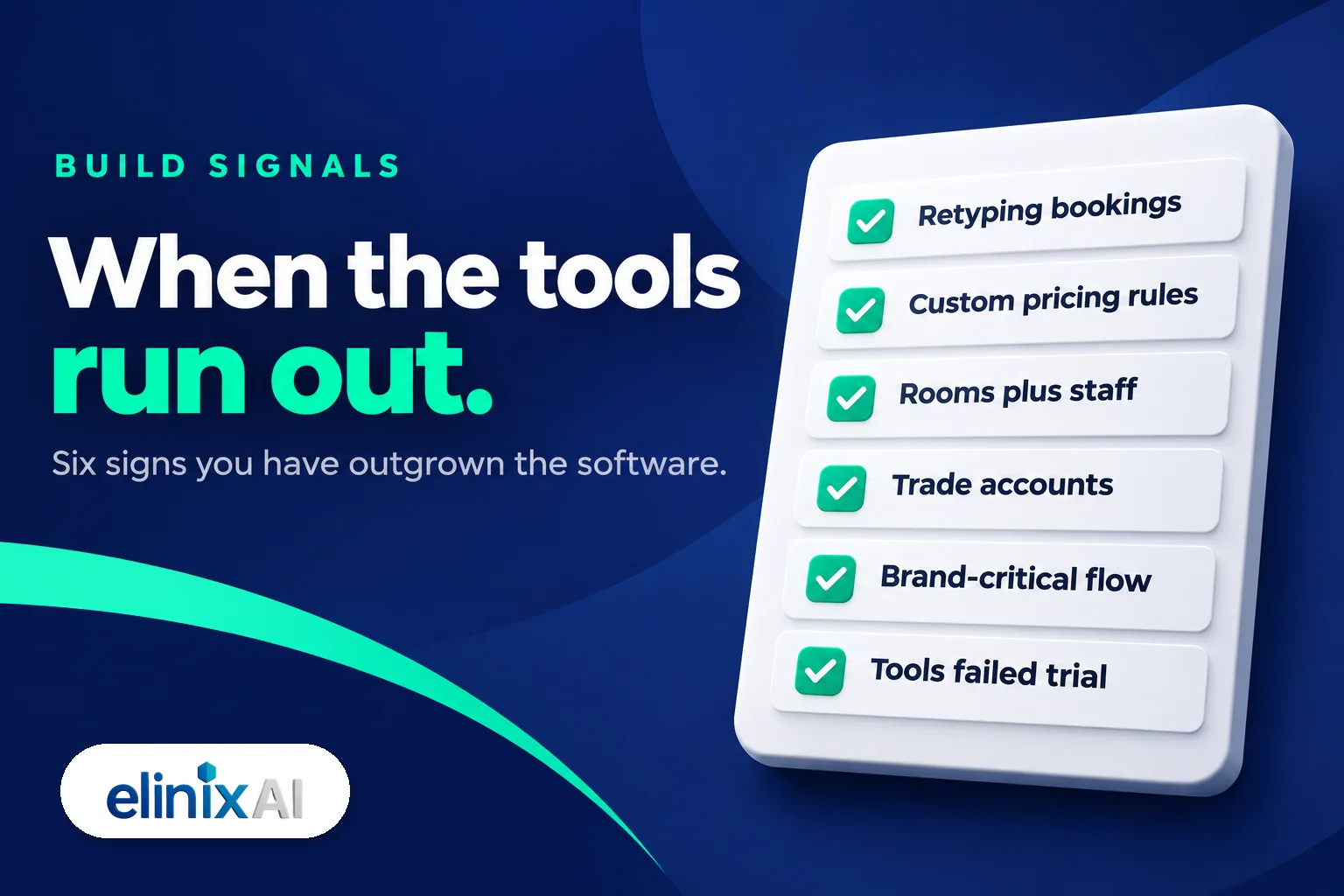
These are the signs a business has outgrown the tools:
- Staff retype bookings into another system every day.
- Prices depend on rules that a booking app cannot express.
- Bookings need equipment, rooms and people at the same time.
- Trade or wholesale customers need their own prices and history.
- The booking flow is the product, and it has to match the brand.
- A trial of two or three tools failed on the same requirement.
The first sign is the easiest to price. If two staff members spend an hour a day retyping bookings, put an hourly cost on those hours and compare it with the build and maintenance. What's The Damage gives the same advice for web applications: price the admin hours the software retires before you sign.
As a custom build is a software project, it carries ongoing cost from the day it launches. Hosting, security updates, dependency updates and fixes all continue. If you cannot fund maintenance, the tool you can afford to keep running is the better choice.
Free audit: not sure whether your booking problem needs software or a build? Book a free 15-minute website audit and we will tell you honestly which side of the line you are on.
What should a customer portal include?
A customer portal should include the few tasks customers currently email or call you about, and nothing more in its first version. For most ecommerce and service businesses, that means order or booking history, rebooking or reordering, account details, invoices and a way to raise a request. Each extra feature adds design, testing and maintenance cost.
Start by checking what your platform already gives you. Shopify's customer accounts let customers "view and manage their orders", update their profile and start self-serve returns or reorders (Shopify Help Center, 2026). Sign-in uses a one-time 6-digit code sent by email, so customers do not need a password.
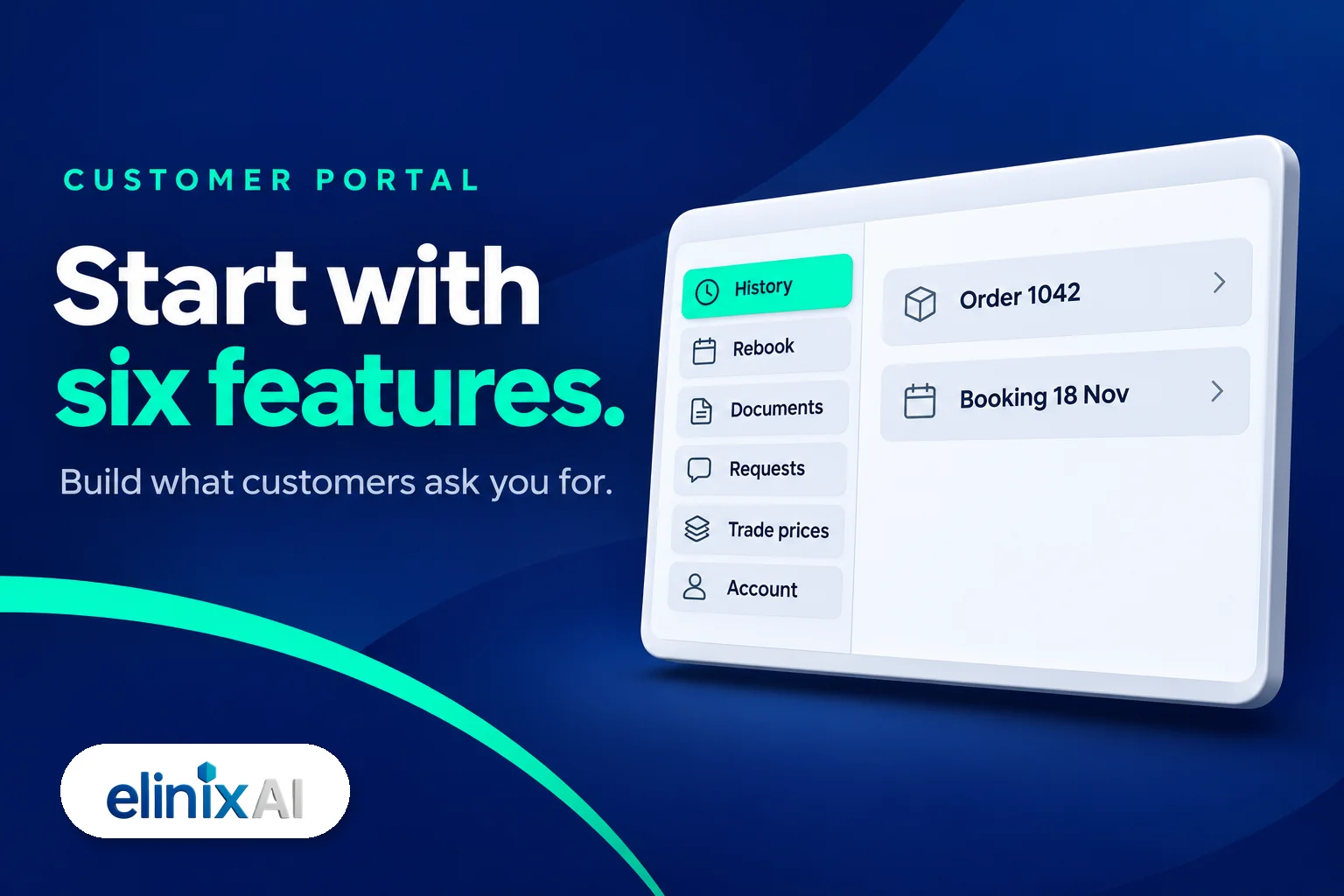
If that covers your customers, a custom portal is not needed yet. If it does not, these are the features worth scoping, in the order most businesses need them:
- History. Past bookings, orders and invoices in one place.
- Self-service. Rebook, reschedule, cancel or reorder without contacting you.
- Documents. Quotes, warranties, certificates or forms the customer needs again.
- Requests. A simple form that lands in your inbox or CRM with the account details attached.
- Trade pricing. Customer-specific prices and terms for wholesale or dealer accounts.
- Roles. Separate access for staff, customers and, if needed, partners.
Plan the privacy side at the same time. The Privacy Act covers businesses with annual turnover over A$3 million, and it covers health service providers regardless of turnover (OAIC, 2026). A clinic or allied health business with a booking portal is in scope even if it is small. Ask where customer data is stored, who can see it, and how a breach would be handled.
How much does a custom booking system or portal cost in Australia?
A custom booking system or customer portal typically costs A$25,000 to A$100,000 or more in Australia, and a smaller first version A$15,000 to A$60,000, as market ranges (What's The Damage, November 2026). Those are bands, not quotes. The final price depends on the number of user types, workflows, edge cases and connected systems.
| Item | Market range in A$ (What's The Damage, November 2026) |
|---|---|
| Web application, such as a portal or dashboard | 25,000 to 100,000+ |
| First version (MVP) | 15,000 to 60,000 |
| API and integration work | 5,000 to 25,000 |
| Development time | 150 to 300 an hour |
| Yearly maintenance | 10% to 25% of the build cost |
The minimum viable product (MVP) row matters most for a first build. A minimum viable product is the smallest version that real customers can use. It lets you test whether people actually book or log in before you pay for every feature.
Time follows the same drivers as cost. A booking page that sits on top of an existing site is a smaller job than a portal with roles, trade pricing and two-way sync to a CRM. A developer can only give an honest timeline after the requirements are written down, which is why a written scope should come before any start date.
At Elinix AI, booking systems, quote forms and customer portals are built on top of existing sites as part of our custom builds. Each one is quoted after a free audit, once the scope is clear. Agencies can also bring us in for these builds under their own name through our agency partner programme.
If your real budget question is about the store itself, our guide to what an ecommerce website redesign costs in Australia covers the market bands for themes, custom builds and migrations.
How does a custom booking system connect to Shopify or your CRM?
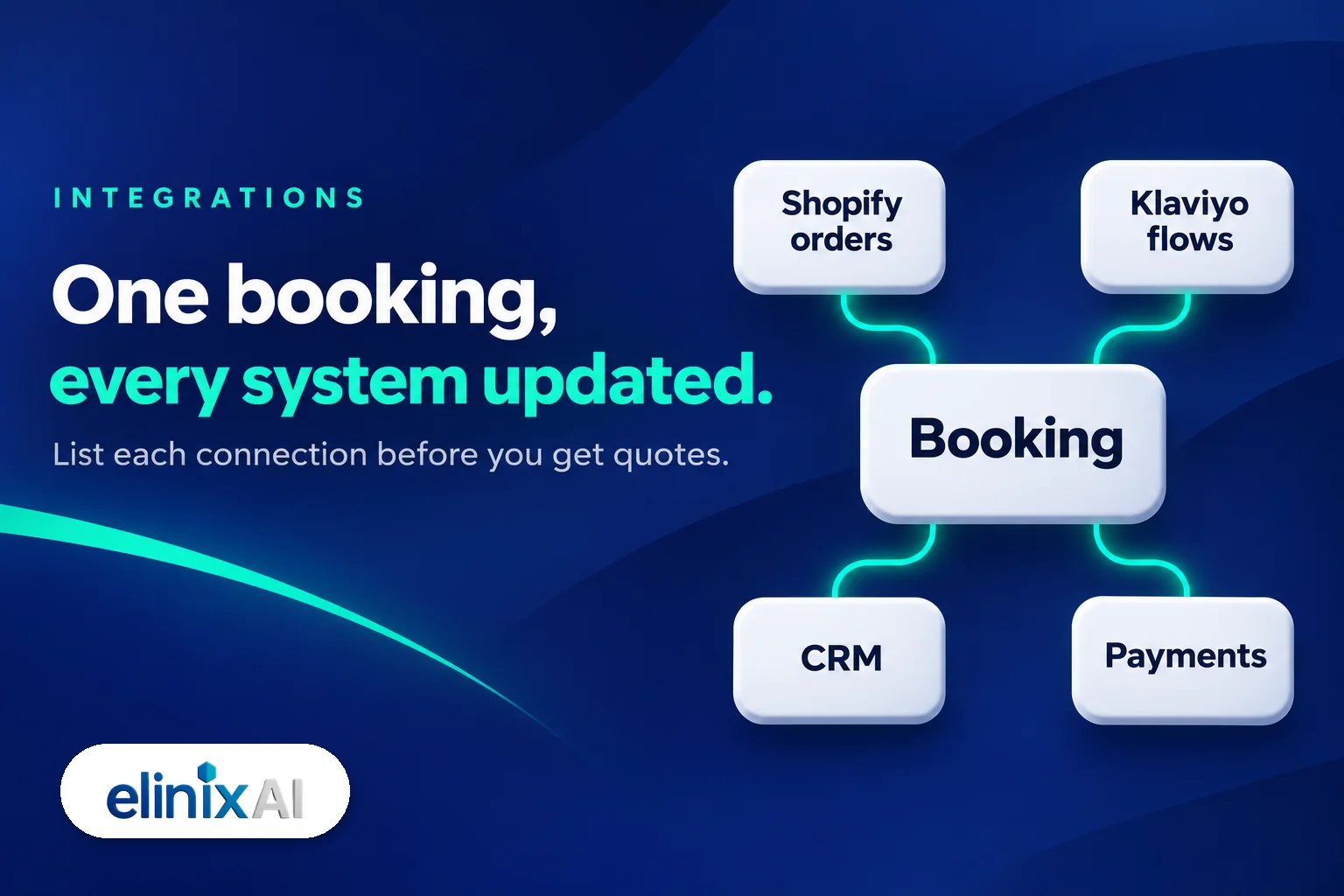
A custom booking system connects to Shopify through a custom app that reads and writes store data with Shopify's APIs. It connects to a CRM or an email platform the same way, through that system's API. Each connection is its own piece of integration work, so list every system the booking has to update before you ask for a quote.
Shopify describes a custom app as one "you or a developer builds exclusively for your Shopify store" (Shopify Help Center, 2026). Custom apps are now created and managed in Shopify's Dev Dashboard, and older ones made before 1 January 2026 can still be managed from the admin. Shopify is clear that building one "requires development knowledge and can be challenging".
These are the connections most Shopify businesses ask for:
- Bookings create orders in Shopify, so revenue reports stay in one place.
- Customer records match between Shopify, the booking system and the CRM.
- Booking events reach Klaviyo, so reminders and follow-ups run as flows.
- Stock or capacity updates in both directions, so nothing is double-booked.
- Payments run through the checkout you already use.
The Klaviyo connection is often the cheapest win. Klaviyo's developer guide explains how a platform without a built-in integration can send its own events, which can then be used for filters and triggers (Klaviyo Developers, 2026). Once a booking event arrives, the reminder, review request and rebooking emails work like the Klaviyo flows a Shopify store already runs.
Your platform choice changes this work too. Shopify and WooCommerce handle apps, plugins and APIs differently, which our Shopify vs WooCommerce comparison explains for Australian stores.
Keep public booking pages readable as well. If a service page or booking page only renders in JavaScript, search engines and AI tools may not read the content. Our 12 Shopify AI search checks show how to test that on your own store.
What should you ask a developer before you sign?
Ask a developer who owns the code and data, what the build costs to run each year, what the first version includes, and how each integration will be tested. Clear answers to those four questions protect you more than any feature list. A developer who cannot answer them in writing is not ready to quote.
- Ownership. Will we own the code, the hosting account and the customer data?
- Running cost. What will hosting, maintenance and third-party services cost each year?
- First version. Which features are in the MVP, and which come later?
- Integrations. Which systems will this connect to, and how will each sync be tested?
- Rates. What is the hourly rate for changes after launch, written into the agreement?
- Payments. Are payments staged against milestones, rather than paid upfront in full?
- Privacy. Where is customer data stored, and what happens after a data breach?
- Handover. What documentation do we get if we change developers later?
What's The Damage advises staged payments against milestones and a written hourly rate for changes. Both protect you if the scope grows. A fixed price only stays fixed when the scope and acceptance criteria are written down.
Free audit: before you collect quotes, book a free 15-minute website audit. We will look at your current setup, tell you whether a tool would do the job, and scope a build only if you need one.
Frequently Asked Questions
How much does a custom booking system cost in Australia?
A custom booking system in Australia typically costs A$25,000 to A$100,000 or more as a market range, and a smaller first version A$15,000 to A$60,000 (What's The Damage, November 2026). Integration work adds A$5,000 to A$25,000, and maintenance runs 10% to 25% of the build cost each year. Elinix AI quotes each build after a free audit.
Is Square Appointments free in Australia?
Square Appointments has a free plan in Australia for a single location, with an online booking page, reminders and card on file (Square Australia, 2026). The Plus plan costs A$40 a month per location and Premium costs A$90 a month per location. Online card payments cost 2.2% on every plan.
Can I add a booking system to my Shopify store?
Yes. A Shopify store can add bookings through an app from the Shopify App Store, such as BookThatApp, which has a free plan for 10 bookings (Shopify App Store, 2026). If no app fits your rules, a developer can build a custom app that works only with your store through Shopify's APIs.
Do I need a custom customer portal on Shopify?
Most Shopify stores do not need one at first. Shopify customer accounts already let customers view and manage orders, edit their profile, and start self-serve returns or reorders, with a one-time code instead of a password (Shopify Help Center, 2026). A custom portal makes sense for trade pricing, documents or service history.
How long does it take to build a customer portal?
A customer portal takes as long as its scope, so the timeline depends on the number of user types, features and connected systems. A portal on top of an existing site with a few features is a much smaller job than one with roles, trade pricing and CRM sync. Ask for a written scope before you accept any start date.