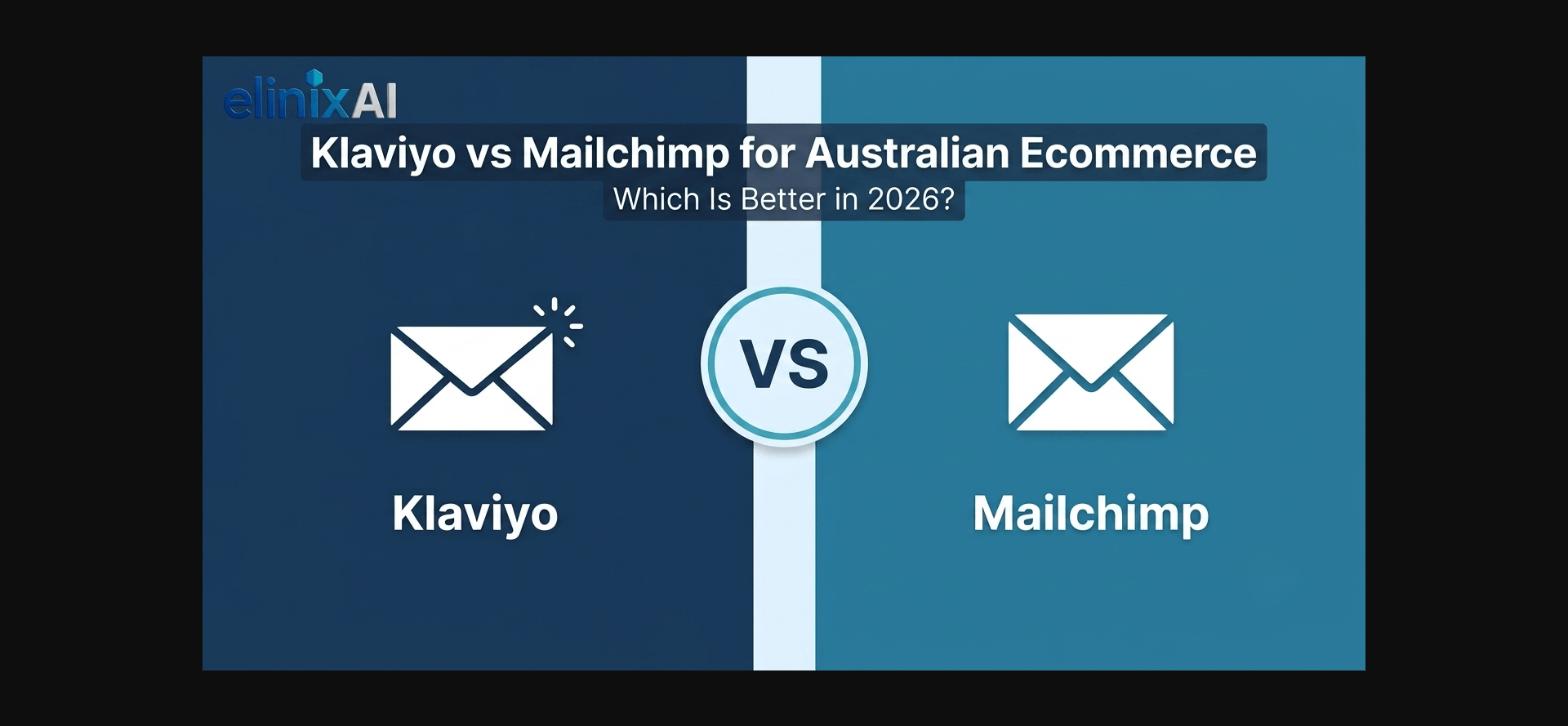
For Shopify stores selling in Australia, Klaviyo is generally the better email marketing platform, and Mailchimp is the better budget choice for small or non-ecommerce lists. Klaviyo is built for ecommerce: it syncs Shopify order, product and browsing data in real time, powers revenue-generating automation like abandoned cart and post-purchase flows, and includes SMS marketing in the same platform. Mailchimp is a general-purpose email tool that suits simple newsletters, smaller lists and tighter budgets.
On headline price, Mailchimp is cheaper on its entry plans. Mailchimp paid plans start near US$13 per month, while Klaviyo starts near US$20 per month and rises faster as your list grows. The deciding question is not which platform costs less. It is which platform turns your Shopify data into repeat revenue. For a store where email should drive 20% to 40% of revenue, Klaviyo's ecommerce automation usually pays back its higher cost. For a brand sending an occasional newsletter, Mailchimp is enough.
This guide compares pricing, Shopify integration, automation, segmentation and SMS marketing for Australian ecommerce brands, and shows what happened for one Australian brand that reached 53% of store revenue from email.
Quick answer: For Shopify ecommerce businesses, Klaviyo generally outperforms Mailchimp through deeper Shopify integration, ecommerce-specific segmentation, advanced automation and integrated SMS marketing. Mailchimp remains suitable for smaller Australian businesses with basic email needs and tighter budgets. The right choice depends on subscriber growth, SMS requirements and the importance of automated revenue-generating flows.
What are Klaviyo and Mailchimp?
Klaviyo and Mailchimp are both email marketing platforms, but they were built for different jobs. Klaviyo is an ecommerce marketing platform designed around store data, so orders, products and browsing behaviour drive its emails and automation. Mailchimp is a general-purpose email and marketing tool built first for newsletters and small business marketing, with ecommerce features added later.
That origin difference shapes everything below. Klaviyo treats every subscriber as an ecommerce customer profile with a purchase history, a predicted lifetime value and a live activity feed. Mailchimp treats a subscriber first as a contact on a list, then layers ecommerce data on top through an integration.
For an Australian Shopify brand, the practical result is simple. Klaviyo starts from your store and builds email around it. Mailchimp starts from email and connects to your store afterward.
"Most Shopify brands that move to Klaviyo do not do it for features. They do it because their old platform could not see what customers were actually doing on the store, and you cannot automate revenue from data you cannot access."
>
Ewen Ling, Founder, Elinix AI
Klaviyo vs Mailchimp pricing compared (by list size)
Both platforms price by list size, but they measure it differently, and that difference matters more than the headline numbers. Klaviyo bills on active profiles, meaning every contact you could email. Mailchimp bills on total contacts in your audience, including unsubscribed and non-opted-in contacts. So a messy Mailchimp list can cost more than its size suggests.
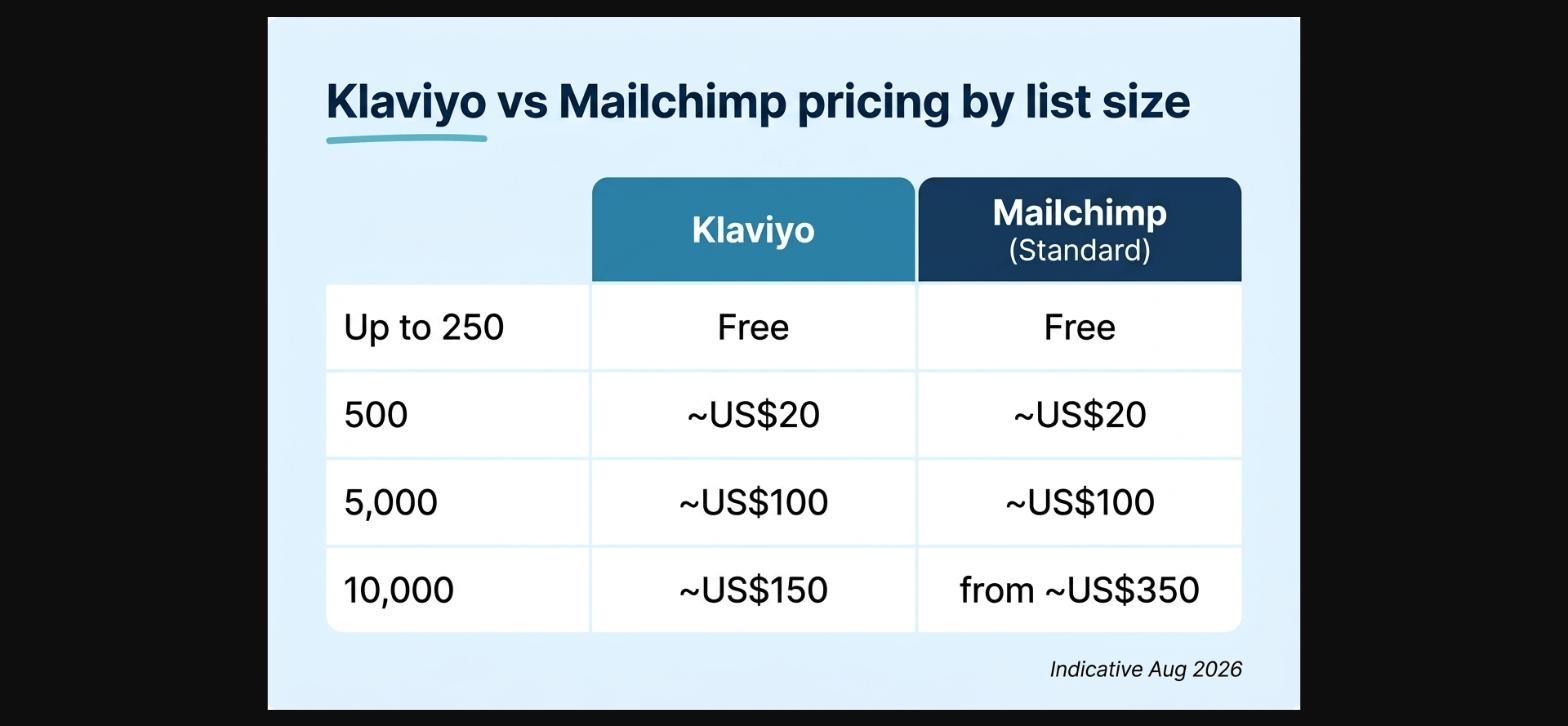
The figures below are indicative and set in US dollars, current as of August 2026. Both Klaviyo and Mailchimp publish prices in US dollars, so Australian brands pay the Australian dollar equivalent on the day, plus any card conversion fee. Always confirm the current amount on the official pages before you commit: Klaviyo pricing and Mailchimp pricing.
Klaviyo (Email plan, billed on active profiles):
| Emailable contacts | Indicative monthly cost (USD) |
|---|---|
| Up to 250 | Free (500 email sends per month) |
| 500 | ~US$20 |
| 1,000 | ~US$30 |
| 5,000 | ~US$100 (varies with exact profile count) |
| 10,000 | ~US$150 (varies with exact profile count) |
Mailchimp (billed on total contacts, including unsubscribed):
| Emailable contacts | Essentials (USD) | Standard (USD) |
|---|---|---|
| Up to 250 | Free (500 sends per month) | Free |
| 500 | ~US$13 | ~US$20 |
| 5,000 | ~US$75 | ~US$100 |
| 10,000 | (Premium tier) | Premium from ~US$350 |
Two points decide real cost. First, Mailchimp's cheapest paid plan (Essentials) does not include multi-step automation, so ecommerce brands almost always need Standard or higher, which narrows the price gap with Klaviyo. Second, Klaviyo moved to active-profile billing in February 2025, which raised bills for brands carrying large, inactive lists and made list hygiene a cost-control task.
For a deeper breakdown of what an email program actually costs an Australian ecommerce brand once setup and management are included, see our guide on how much email marketing costs for Australian ecommerce brands.
Shopify integration compared
Klaviyo has a deeper Shopify integration than Mailchimp, and for an ecommerce brand this is the single biggest difference between the two platforms. Klaviyo is a recognised Shopify email partner with a native, real-time integration. Mailchimp connects through an app with a narrower data feed and a more limited history on the platform.
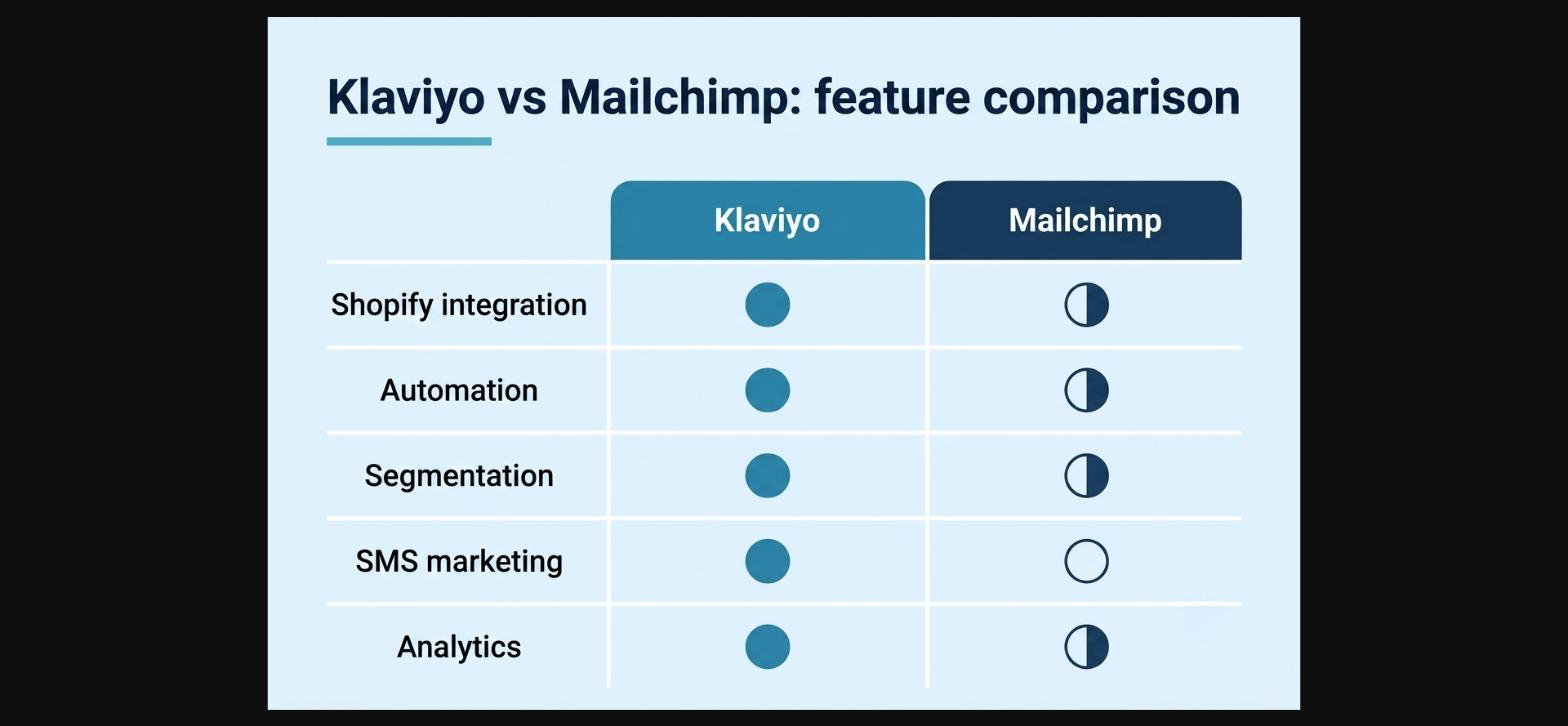
Klaviyo's Shopify integration syncs customer profiles, full order history, the product catalogue and real-time browsing behaviour directly, without third-party plugins. That live data lets you trigger emails on specific behaviour: which product someone viewed, how many times they visited a product page, their predicted lifetime value, and their likelihood of buying again. You can read the detail in Klaviyo's Shopify integration documentation and on the Klaviyo listing in the Shopify App Store.
Mailchimp's Shopify relationship has a rocky history. Mailchimp was removed from the Shopify App Store in 2019 after a dispute over data-sharing requirements, and the integration was later restored. Today the Mailchimp Shopify integration is active and syncs core customer and order data, and it supports abandoned cart automation. It is shallower than Klaviyo's, with more limited browse abandonment, real-time catalogue sync and behaviour-based segmentation.
For a store that runs on Shopify, integration depth is not a technical footnote. It is the ceiling on how much of your revenue email can drive.
Automation and customer flow comparison
Klaviyo builds deeper ecommerce automation than Mailchimp because its flows read live Shopify data. Both platforms offer welcome emails, abandoned cart reminders and post-purchase messages. The gap shows in how precisely each platform can trigger, branch and personalise those flows using store behaviour.
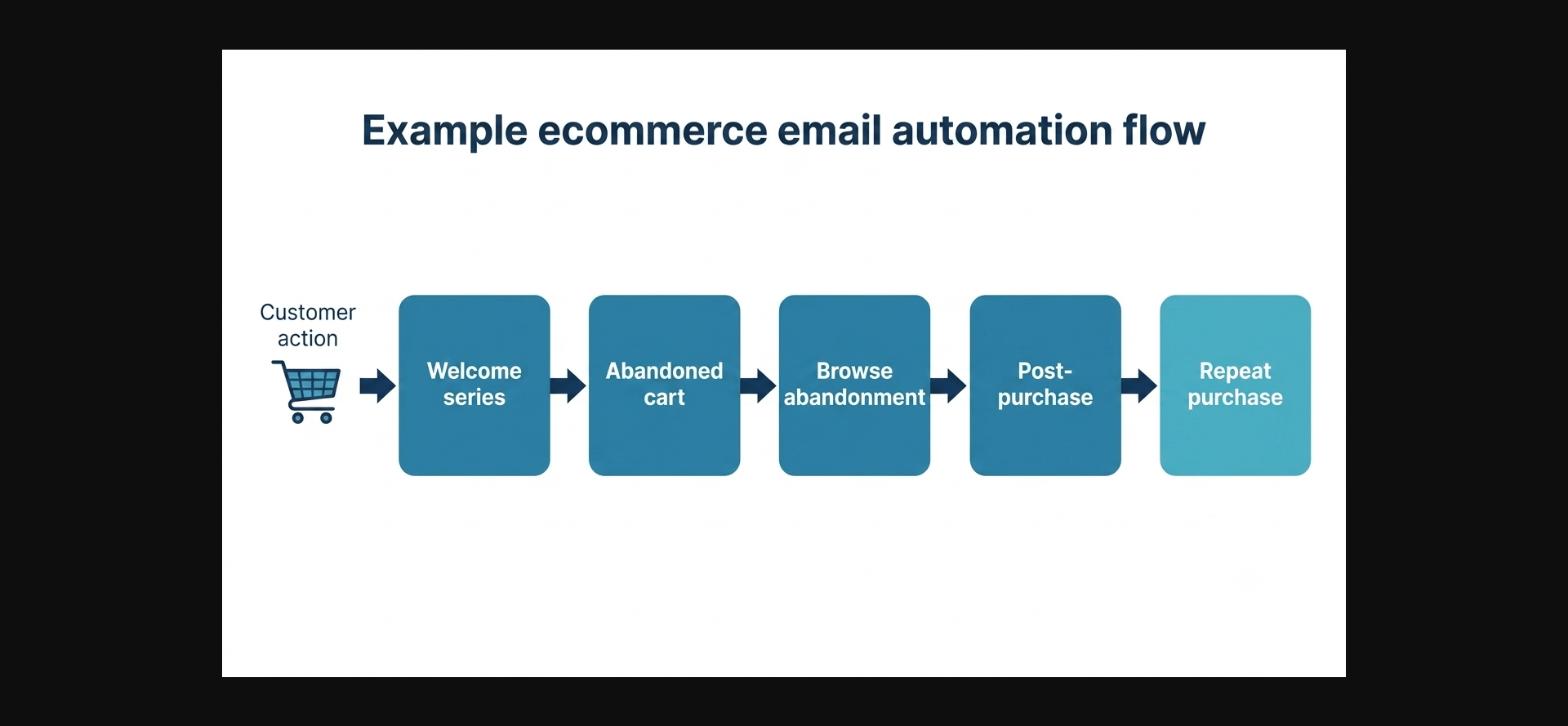
In Klaviyo, a flow can branch on real events and attributes: the specific product viewed, the number of past orders, the predicted lifetime value, the time since last purchase. That lets one abandoned cart flow behave differently for a first-time visitor and a repeat VIP customer, automatically, with no manual list work.
Mailchimp's automation improved over the years, but multi-step automation sits behind its Standard plan and above, and its branching logic draws on a narrower set of Shopify data. For a simple welcome series or a basic cart reminder, Mailchimp is capable. For layered ecommerce flows that adapt to customer value and behaviour, Klaviyo has more room to work.
The core flows every Australian Shopify brand should run are the same on either platform:
The difference is not whether you can build these flows. It is how much revenue each one recovers once it reads real store behaviour. For a fuller walkthrough of building these on a Shopify store, see our step-by-step guide to email marketing in Australia.
Customer segmentation and SMS marketing comparison
Klaviyo offers stronger ecommerce segmentation and native SMS marketing, while Mailchimp offers simpler segmentation and a limited SMS add-on. For Australian brands that want email and text working together, this is a decisive gap.
Segmentation. Klaviyo lets you build segments from live ecommerce data on its base paid plans: predicted customer lifetime value (CLV), average order value, purchase frequency, product category preference and real-time behaviour. Mailchimp offers tags and basic segmentation on lower tiers and locks its more advanced segmentation behind higher plans. For a Shopify brand, richer segmentation means more relevant email and less list fatigue.
SMS marketing. Klaviyo includes SMS marketing in the same platform as email, so you can run coordinated flows. One abandoned cart sequence can send an email at one hour and a short message service (SMS) text a few hours later if the email goes unopened. Mailchimp's SMS is a limited add-on that requires approval, and Australian coverage applies only to contacts with a +61 number.
Australian SMS marketing also carries a compliance requirement that applies whichever platform you choose. From 1 July 2026, businesses using a brand name as the sender ID on marketing texts must register that sender ID with the ACMA SMS Sender ID Register through their message provider. Unregistered sender IDs risk being labelled unverified or blocked. Every marketing email and SMS in Australia must also meet the Spam Act 2003 obligations of consent, sender identification and a working unsubscribe.
Which platform is more cost-effective for 5,000 subscribers?
At 5,000 subscribers, Mailchimp is usually cheaper on the invoice, but Klaviyo is often more cost-effective once revenue is counted. Mailchimp Standard and Klaviyo's Email plan land close to each other at this list size, in the region of US$100 per month, with Mailchimp Essentials cheaper if you can live without multi-step automation.
Cost-effectiveness is revenue per dollar spent, not the lowest line item. A store running proper ecommerce flows on Klaviyo at 5,000 subscribers typically recovers more revenue per email than the same list on Mailchimp, because Klaviyo's flows read live Shopify behaviour and Mailchimp's do not. If email at that stage should contribute a meaningful share of sales, the extra platform cost is usually recovered many times over.
The honest exception matters. If your 5,000 contacts receive an occasional newsletter and you run few or no automated flows, you are not using the features you would pay Klaviyo for. In that case Mailchimp is the more cost-effective choice, and the right move is to fix the strategy before switching the tool.
"The real question is never which email platform is cheaper. It is which one turns your Shopify data into repeat revenue. A tool that costs a little more each month but drives 30% of your sales is not an expense. It is your best-performing asset."
>
Ewen Ling, Founder, Elinix AI
Which platform builds better abandoned cart and post-purchase automations?
Klaviyo builds stronger abandoned cart and post-purchase automations than Mailchimp because both flows depend on live Shopify data that Klaviyo reads natively. Recovering an abandoned cart requires the platform to know the exact items left behind, their images and prices, and the customer's history. Klaviyo pulls all of that from Shopify in real time.
Cart abandonment is the largest recoverable revenue leak in ecommerce. Baymard Institute's ongoing analysis puts the average online cart abandonment rate near 70%, which means most of the buying intent on a Shopify store never reaches checkout without follow-up. An abandoned cart flow that shows the exact product, at the right moment, to the right customer, is how brands recover a share of it.
Post-purchase automation is where Klaviyo's data model pays off again. Because Klaviyo knows what was bought, when and by whom, a post-purchase flow can recommend complementary products, request a review at the right interval, and route high-value buyers into a VIP path. Mailchimp can send a post-purchase email, but with a narrower view of store data it personalises less and branches less.
Real client case study: 53% of store revenue from email marketing
One Australian beauty brand that Elinix AI works with reached 53% of total store revenue from email over a 30-day period. Total revenue for the period was A$15,400, up 121% on the prior 30 days, and email-attributed revenue was A$8,200, up 161%. These figures are anonymised and drawn from the brand's Klaviyo and Shopify analytics dashboards, compared against the previous 30-day period.
The result did not come from switching platforms alone. It came from using Klaviyo's ecommerce data to rebuild the brand's core flows: a segmented welcome series, an abandoned cart flow that showed the exact products left behind, a post-purchase series that requested reviews and recommended refills, and a winback flow for lapsed customers. Each flow used live Shopify behaviour, which is what let email carry more than half of store revenue in the period.
Results like this depend on the brand, the product, the list quality and the strength of the setup, and they vary. You can see the anonymised figures on the Elinix AI results section, where an Australian beauty brand reached 53% of revenue from email in 30 days. The point is not the exact number. It is that the platform's data model, correctly used, is what makes that share of revenue reachable at all.
Things to consider before migrating from Mailchimp to Klaviyo
Migrating from Mailchimp to Klaviyo is a common path for growing Shopify brands, and it is straightforward, but the work is in rebuilding, not exporting. Klaviyo provides a migration process that brings your contacts and historical data across. The real effort is recreating flows, segments and templates so they use Klaviyo's live Shopify data rather than copying old Mailchimp logic.
Consider these points before you switch:
The trade-off is honest. Migration costs time and setup effort in the first weeks. The return is a platform that reads your store, which is what lets email drive a larger, more predictable share of revenue afterward.
Final verdict: which should your Shopify store choose?
For most Australian Shopify brands, Klaviyo is the better email marketing platform, because it is built on the store data that drives ecommerce revenue. Klaviyo wins on Shopify integration, automation depth, segmentation and native SMS. Mailchimp wins on entry price and simplicity, and it remains a sensible choice for very small lists, non-ecommerce brands and simple newsletter sending.
Choose Klaviyo if your store runs on Shopify, email should drive a meaningful share of revenue, and you want automation and SMS working from real customer behaviour. Choose Mailchimp if your list is small, your needs are basic, and the free or entry tier covers your whole program. The platform is only half the outcome. The setup is the other half, and a well-built Klaviyo account is what turns the higher cost into higher revenue.
If email should be driving 20% to 40% of your Shopify store's revenue and it is not, see how Elinix AI builds and manages Klaviyo email and SMS systems for Australian ecommerce brands.
Frequently asked questions
Is Klaviyo more expensive than Mailchimp? On entry plans, yes. Mailchimp paid plans start near US$13 per month and Klaviyo near US$20 per month, and Klaviyo scales faster as your list grows. At comparable feature levels, such as Mailchimp Standard against Klaviyo's Email plan, the two are close at small to mid list sizes. The gap widens at scale. Cost-effectiveness depends on how much revenue email drives, not the line item alone.
Can I migrate from Mailchimp to Klaviyo without losing my automations? You keep your contacts and historical data, but you rebuild automations rather than transfer them. Klaviyo's flow logic reads live Shopify data, so recreating your flows in Klaviyo is both necessary and where the value comes from. Expect setup time to rebuild flows, segments and templates properly.
Does Klaviyo integrate better with Shopify than Mailchimp? Yes. Klaviyo has a native, real-time Shopify integration that syncs orders, products and browsing behaviour directly. Mailchimp's Shopify integration is active but shallower, with more limited real-time data and behaviour-based segmentation.
Which platform is better for SMS marketing in Australia? Klaviyo, because SMS marketing runs in the same platform as email and can be coordinated inside the same flows. Mailchimp's SMS is a limited add-on that requires approval and covers Australian contacts only on +61 numbers. On either platform, brands using a brand name as their SMS sender ID must register with the ACMA SMS Sender ID Register from 1 July 2026.
What happens to Mailchimp pricing as my subscriber list grows? Mailchimp bills on total contacts in your audience, including unsubscribed and non-opted-in contacts, so your bill can rise even when your active audience does not. Its Premium tier begins around US$350 per month at 10,000 contacts. Keeping your list clean is the main way to control cost on Mailchimp.
Ewen Ling is the Founder of Elinix AI and has over 16 years of ecommerce industry experience across website conversion optimisation, email and SMS marketing automation, retention marketing, and ecommerce growth strategy. Elinix AI helps Australian ecommerce brands fix revenue leaks, improve conversion, and build sustainable customer retention systems.