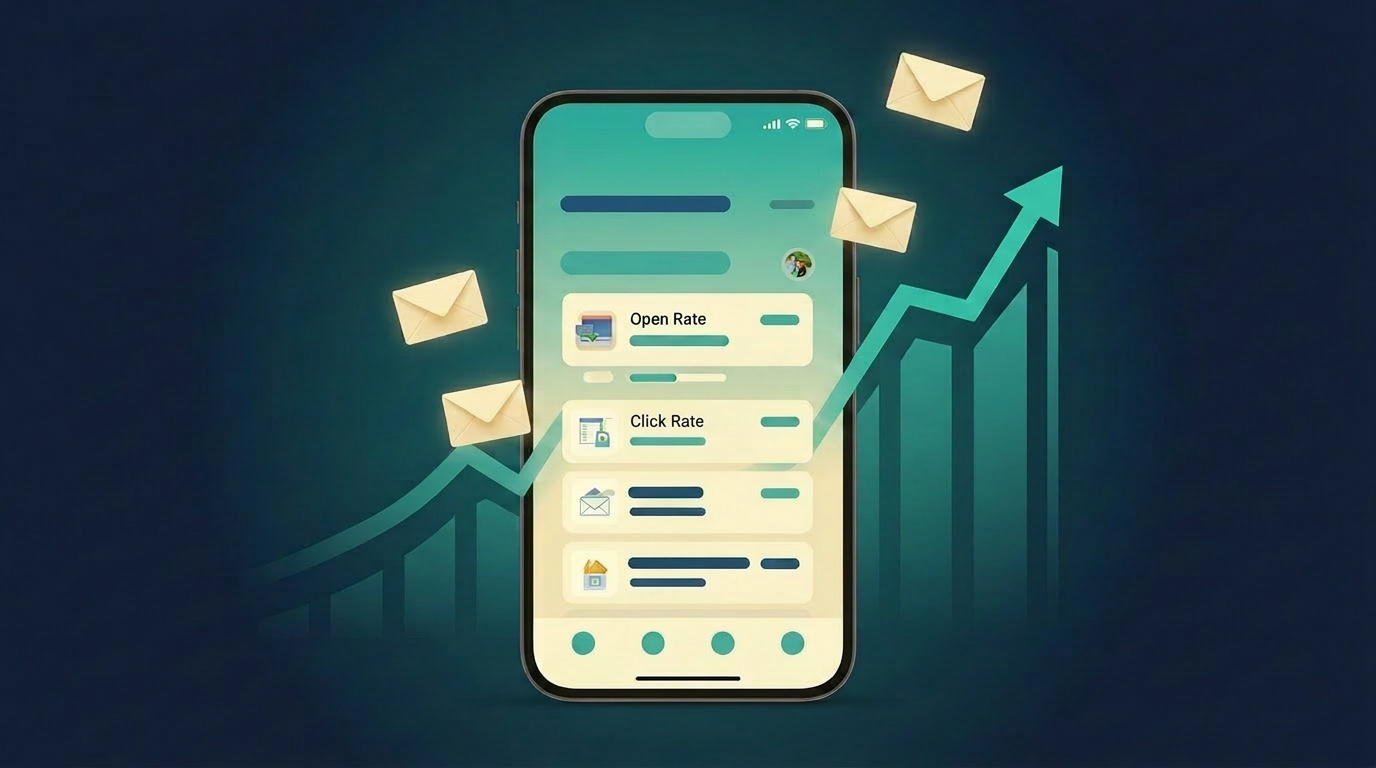
A good email open rate for ecommerce brands in Australia sits between 35% and 50%, which is significantly higher than the global all-industry average. If your open rates are falling below 20–25%, your subject lines, list health, or sending strategy likely need attention. But open rate is just one piece of the puzzle — and understanding what's actually a "good" number requires context around your industry, email type, and platform.
Whether you're running email and SMS marketing automation for the first time or trying to improve an existing Klaviyo setup, this guide breaks down exactly what benchmarks to aim for, what's dragging your rates down, and how to fix it.
Why Open Rate Still Matters (Even in 2026)
Before diving into the numbers, it's worth addressing a common question: does open rate still mean anything?
The short answer is yes — with caveats.
Apple's Mail Privacy Protection (MPP), introduced in 2021, automatically preloads email content on Apple devices, registering a "open" even when the recipient hasn't actually viewed the email. Since Apple Mail accounts for roughly 46% of email clients, this has inflated reported open rates across the board. Studies tracking over 80,000 email marketing accounts found that open rates jumped by around 18 percentage points after MPP rolled out.
This doesn't mean you should ignore open rates — it means you should read them alongside click-through rate (CTR) and click-to-open rate (CTOR), which are less distorted by privacy changes and give you a clearer picture of real engagement.
That said, open rate is still a useful directional metric. A sharp drop in open rates signals a deliverability issue, a subject line problem, or a disengaged list. A steady upward trend usually means your targeting and content are improving. It remains a meaningful first filter.
Email Open Rate Benchmarks: Australia vs. Global
Here's the good news for Australian ecommerce brands: Australia consistently leads the world in email engagement.
According to MailerLite's 2026 Email Marketing Benchmark Report, campaigns sent in Australia achieved the highest open rate globally at 47.69%, compared to the worldwide average of 43.46%. Australian campaigns also led in click rate (2.82%) and click-to-open rate (8.3%).
The Frank Agency's 2026 data puts the Australian average even higher, at 46.34% — comfortably ahead of the US, UK, and Canada.
Why does Australia outperform? A few reasons:
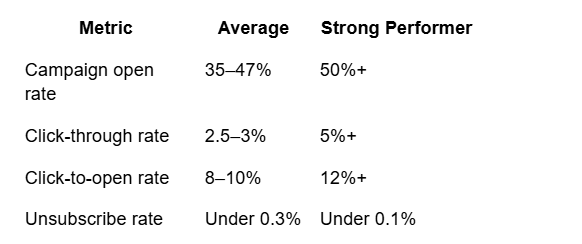
For ecommerce specifically, data from Opensend puts the average open rate for retail and ecommerce at 35.90%, while the broader all-industry median sits at 42.35%. What this means in practice: if your ecommerce email campaigns are hitting 35–45% open rates, you're tracking well. Below 25% suggests something needs work.
Quick reference benchmarks for Australian ecommerce brands:
Automated Email Flows vs. Campaigns: A Critical Distinction
One of the most important things to understand about email open rate benchmarks is that not all emails are created equal. Comparing your welcome flow's open rate to a promotional campaign's open rate is like comparing apples to oranges.
Automated email flows — triggered by customer behaviour — almost always outperform batch campaigns because they're sent at the moment of highest intent. A shopper who just abandoned their cart is far more likely to open an email about those specific items than a mass promotional send to your entire list.
Here's how the key flows break down based on Klaviyo's benchmark data:
Welcome Series Welcome emails are your highest-engagement opportunity. According to Klaviyo, welcome flows generate an average open rate well above 50%, and the average revenue per recipient (RPR) sits at $2.65. The top 10% of brands hit a placed order rate of 10.53% from their welcome sequence alone. If you're not hitting above 40% open rates on your welcome emails, your subject lines or send timing need rethinking.
Abandoned Cart Flow Abandoned cart emails are the single highest-converting flow in ecommerce. Klaviyo reports an average open rate of around 50% across apparel, food and beverage, and sporting goods — with average conversion rates (placed order rates) of 3.33%. The average RPR is $3.65, which is 37.74% higher than the next best flow. Food and beverage brands see open rates as high as 52.16% for this flow.
Post-Purchase Flow According to Klaviyo strategy benchmarks, post-purchase flows achieve the highest average open rate of all flows at 59.77%. This makes sense — customers who just bought something are highly attentive to what comes next. While the placed order rate is lower (0.48%), these emails are essential for building loyalty, generating reviews, and driving repeat purchase behaviour.
Browse Abandonment Flow Browse abandonment emails go out when someone leaves your site without adding anything to their cart — a lower-intent signal, but still valuable. Klaviyo data shows these emails achieve an average click rate of 5.48%, which is actually higher than most other automated flows.
Winback / Re-engagement Flow Winback emails targeting lapsed customers see average open rates of around 42.51%, with a click-through rate of 18.27% and a conversion rate of 10.34%. These numbers are compelling because you're reaching people who already know your brand — the challenge is simply re-igniting their interest.
If your ecommerce brand doesn't have these five core flows live and generating revenue, you're leaving money on the table. Learn more about how email automation can drive 30% more revenue for your ecommerce store.
What's Dragging Your Open Rates Down?
Low open rates are rarely random. There are typically a handful of root causes, and diagnosing the right one is the difference between a quick fix and months of guesswork.

1. Weak Subject Lines
Subject lines are the single biggest lever for open rates. Research consistently shows that 47% of email recipients decide whether to open an email based on the subject line alone. A few common mistakes:
What works: urgency paired with specificity ("Only 3 left — your cart is expiring"), questions that spark curiosity, and plain-language subject lines that feel like they're from a real person rather than a marketing department.
2. Poor List Hygiene
Sending to a large list full of disengaged subscribers actively hurts your deliverability. Email service providers like Gmail and Outlook track engagement signals — if your open rates are consistently low, they start routing your emails to spam or promotions, which creates a vicious cycle.
The fix is segmentation. Remove or suppress subscribers who haven't engaged in 90–180 days before sending them campaigns. Run a re-engagement flow first to see if any of them can be reactivated, then clean the rest. A smaller, engaged list will almost always outperform a larger, disengaged one.
3. Wrong Send Times
Sending at the wrong time — even with a great subject line — means your email gets buried under everything else that arrives while your subscriber is offline. Best send times vary by audience, but as a general guide, Tuesday through Thursday mornings (9–11am local time) tend to perform well for ecommerce in Australia.
Klaviyo's "Send at recipient's optimal time" feature uses individual subscriber data to automatically deliver emails at the moment each person is most likely to open. This feature alone has been shown to lift open rates by 10–20%.
4. Not Enough Personalisation or Segmentation
Blasting the same email to every subscriber is the fastest way to tank engagement. Brands that segment their audience and personalise based on purchase history, browsing behaviour, or lifecycle stage see dramatically higher open rates because the content is actually relevant.
Even simple segmentation — like sending a different version of a campaign to first-time buyers vs. repeat customers — can move the needle significantly.
5. Deliverability Issues
If your emails are landing in spam, no amount of subject line optimisation will help. Common deliverability issues include:
Klaviyo Email Marketing: The Platform of Choice for Australian Ecommerce
If you're serious about email marketing in Australia, Klaviyo is the platform most high-performing ecommerce brands are using — and for good reason.
Klaviyo is purpose-built for ecommerce, with native integrations for Shopify and over 350 other platforms. Its AI-powered features include predictive send time optimisation, automated segment building from natural language prompts, personalised product recommendation blocks, and AI-generated subject line variants for A/B testing.
The results speak for themselves: Klaviyo reports that its users earn an average 63x ROI on their email marketing investment. Brands using Klaviyo's AI features have seen up to 82% of their Klaviyo-attributed revenue linked to those tools.
For ecommerce brands in Melbourne and across Australia, the combination of Klaviyo's automation capabilities and a well-built flow strategy is what separates brands generating 20–30% of their revenue from email from those extracting 40–50%+.
At Elinix AI, we specialise in Klaviyo email marketing setup, flow buildouts, and ongoing campaign management for Australian ecommerce brands. We've helped brands go from generating almost no email revenue to attributing 30% of total sales through automated flows — and we do it by building systems that work around the clock without manual intervention.
Email and SMS Marketing: The Power of the Combined Channel
Open rates for email are strong in Australia, but when you layer in SMS marketing, the numbers get even more compelling.
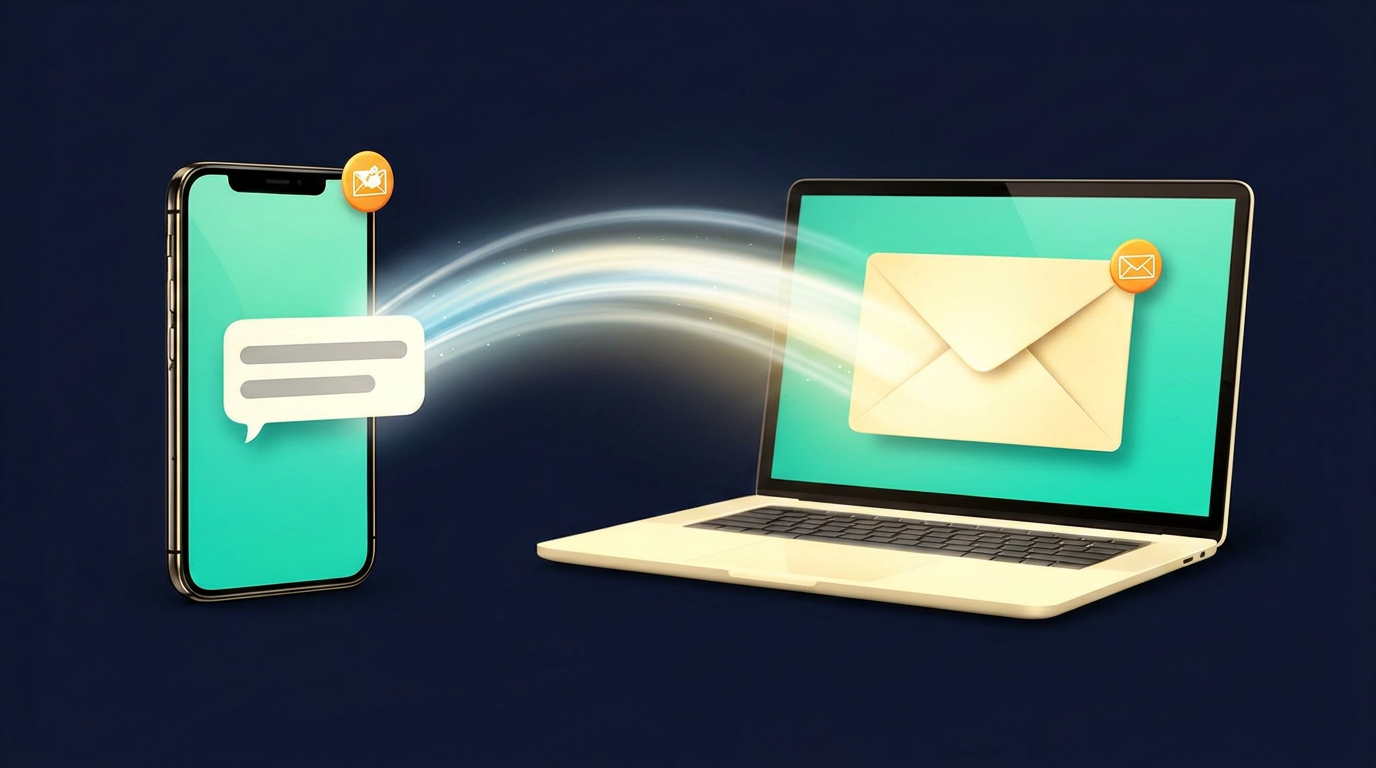
SMS open rates average around 98% — nearly universal — compared to even the best-performing email campaigns. More importantly, SMS messages are typically read within three minutes of receipt, making them ideal for time-sensitive offers like flash sales, back-in-stock alerts, and cart recovery reminders.
The most effective approach isn't choosing between email and SMS — it's integrating them. A well-structured email and SMS marketing system uses each channel for what it does best:
Klaviyo handles both channels natively, meaning your customer data, segmentation, and flow logic apply consistently across email and SMS without needing separate tools or duplicating work.
How to Actually Improve Your Open Rates
Here's a practical, implementation-ready framework for lifting your open rates over the next 30–60 days:
Week 1–2: Diagnose and clean your list
Week 2–3: Audit and improve your subject lines
Week 3–4: Check your core flows
Ongoing: Optimise send timing
For a deeper dive into building these systems from scratch, read our guide on what email marketing actually is and how it works for ecommerce brands.
What Open Rate Benchmarks Can't Tell You
Here's an important reality check: open rate is a leading indicator, not a success metric.
You can have a 55% open rate and still generate almost no revenue from email if your content isn't compelling, your offers aren't relevant, or your website isn't converting. Conversely, a 28% open rate on a highly segmented, well-targeted campaign can outperform a 50% open rate on a generic mass send.
The metrics that matter most for ecommerce email marketing are:
Open rate is the door. Everything behind it — content, offers, personalisation, and your website experience — determines whether that open turns into a sale.
Ready to Build an Email System That Actually Generates Revenue?
A good open rate means nothing if your email flows aren't converting — and most Australian ecommerce brands are still leaving significant revenue behind because their automation isn't set up correctly.
At Elinix AI, we build complete email and SMS marketing systems for ecommerce brands on Shopify and WordPress. That includes Klaviyo setup, flow architecture, list segmentation, campaign strategy, and ongoing performance optimisation — everything needed to make email a predictable, compounding revenue channel.
Book a free strategy call to find out where your email program is losing revenue and what it would take to fix it.
Elinix AI is a Melbourne-based ecommerce digital marketing agency specialising in email and SMS marketing automation, Shopify and WordPress website development, and influencer marketing for Australian brands.* **Learn more about us*.
**